The BBC announced last week that the Doctor Who Christmas Special has been canceled—and so has the show itself.
As part of securing the next phase of the show for future generations, and in line with the BBC’s Charter and Agreement requirements, the BBC will put Doctor Who out to competitive tender this year. Doctor Who remains an important part of the BBC and this tender underpins the BBC’s continued commitment to Doctor Who ensuring audiences will enjoy the show for years to come.
Once again, the famed British institution is off the air. The last time was in 1989 during the tenure of Sylvester McCoy as the Seventh Doctor.
But the circumstances couldn’t be more different.
Classic Who suffered a slow death due to sabotage by higher-ups at BBC, particularly Michael Grade, the then-current Controller of BBC, who had lost faith in the show. Grade himself put the show on an 18-month hiatus in the mid-eighties, calling it “‘rubbish,’ too violent, and a poor use of the license fee,” viewing it as inferior to the likes of Star Wars and E.T. He was also openly hostile to the Sixth Doctor actor, Colin Baker, and sought to have him removed. In other words, the series had no advocate at the network.
While Grade left in 1987, his plan came to fruition two years later, leaving the series in limbo for 16 years. Fan enthusiasm continued via conventions, but aside from an ill-fated TV movie starring Paul McGann in 1996 and a Red Nose Day comedy special called “The Curse of Fatal Death” in 1999, the franchise remained dormant until it was revived by Russell T Davies in 2005. Thus began Nu Who, which exploded in popularity, spawning several spinoffs, thanks largely to the iconic tenures of David Tenant and Matt Smith as the Tenth and Eleventh Doctors, respectively. The series found a sweet spot between adhering to the past and appealing to modern sensibilities.
Steven Moffat took over in season five, and while his run garnered some criticism during Peter Capaldi’s tenure as the 12th Doctor, he was an excellent choice to succeed Davies as showrunner. Moffat wrote the most popular and acclaimed episodes of the first four seasons, such as the iconic “Blink.” He had proven himself an excellent writer and visionary.
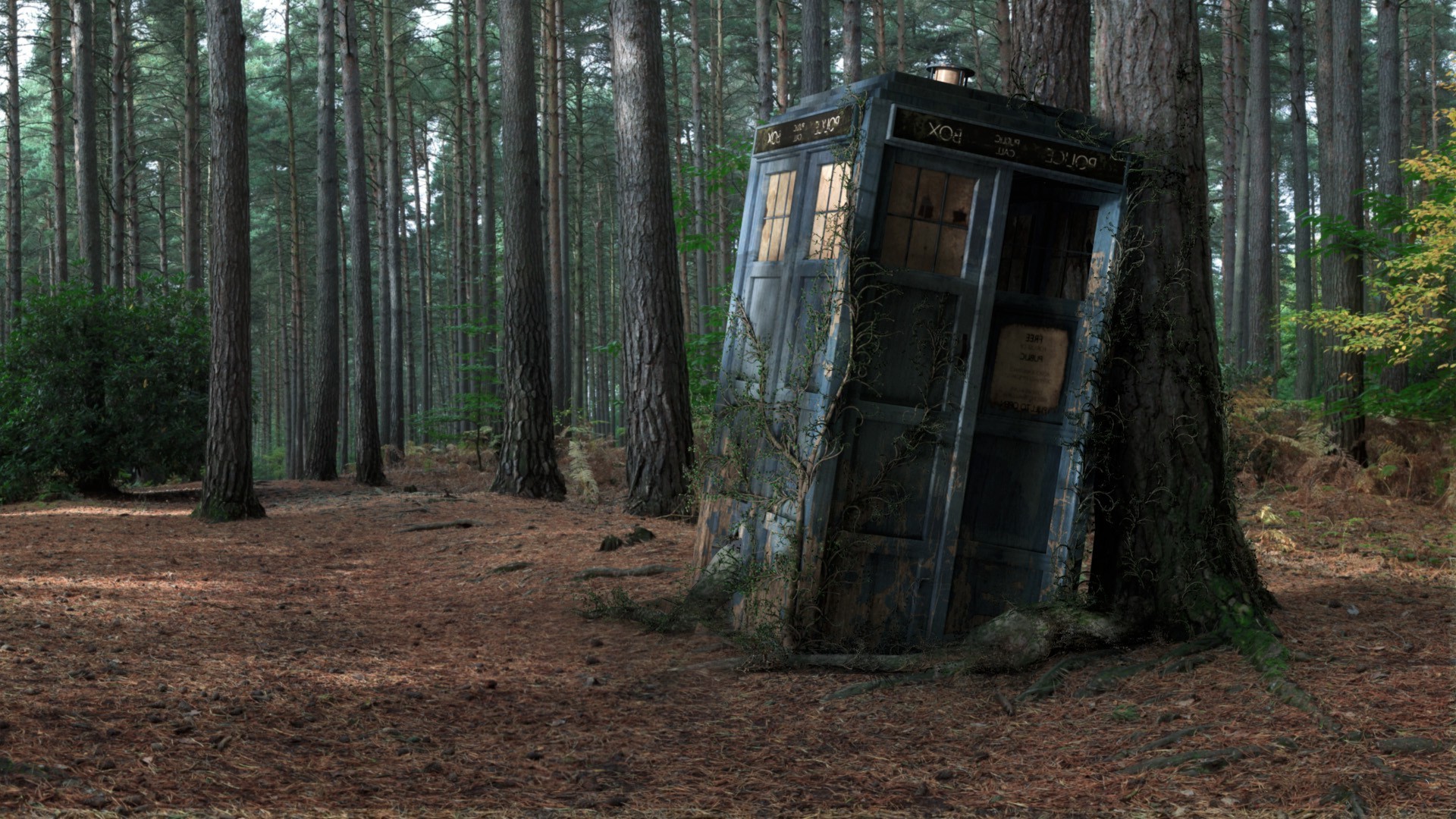
The same couldn’t be said for his successor, Chris Chibnall. He wrote a few episodes that were average, at best, and a handful of scripts for the DW spinoff Torchwood, so his selection left Whovians scratching their heads. He made sweeping reforms to the show, replacing most of the crew and writers, but the most shocking of all was having the Doctor regenerate into a woman. This unfortunately numbered 13th Doctor was played by Jodie Whitaker, and while early episodes got decent ratings out of curiosity and novelty, they slowly tapered off during her tenure. There was also a massive shift in the storytelling. While cracks began to form here and there during Capaldi’s time in the TARDIS, they erupted into chasms under Chibnall. The show became more ideological, alienating many fans with its ham-fisted dialogue and stories. No classic Who foes returned until a single Dalek in the New Year’s Day special “Resolution.” For many fans, the show was unrecognizable aside from the TARDIS exterior.
However, the greatest injury inflicted by Chibnall came with the next season’s infamous finale, “The Timeless Children,” in which the Doctor’s mysterious past is fully revealed with a franchise-breaking retcon. The Doctor’s archenemy, the Master, says the Doctor is not a Time Lord or even a Gallifreyan. No, he was an interdimensional being—who appeared in the form of a little black girl—discovered by a female Gallifreyan scientist. Through horrendous experiments, this scientist forced this being to die and regenerate multiple times until she learned the secrets of this process bestowed it to all Gallifreyans, which led to them building one of the most advanced civilizations in the universe. Not only did this fly in the face of what had been established before—even in the previous seasons of the revived series—it retroactively ruined Classic Who and undermined any suspense in future stories, because the Doctor was made functionally immortal with an infinite number of regenerations. What was once done as jokes in “The Curse of Fatal Death”—female Doctor and flippant regenerations—had now been made “canon.” It was a bridge too far for most Whovians, and the ratings plummeted.
The worst part is this story could’ve worked if not for the Timeless Child being the Doctor. It’s been established since Classic Who that the Doctor is a rebel who had good reason to dislike his fellow Time Lords. They’d become haughty and elitist. Saying they’d acquired their greatest ability by exploiting and torturing another sentient being would fit perfectly. If Chibnall wanted the twist of the Timeless Child being an established character, it would’ve made more sense for it to be the Master. It would explain why he hated the Time Lords and why the Time Lords hated him and also account for the Master’s bizarre abilities and his penchant for cheating normal Gallifreyan limitations. The Time Lords had a long history of reviving him in moments of desperation when they needed a warrior or a leader. If he was this being, that would make sense. Indeed, many fans hoped this revelation would be hand-waved away as a lie by the Master. As it stands, it asks too many questions. How did the Doctor not know he wasn’t a Time Lord? Was his memory erased? How often? How was this information kept from him and everyone he knew for untold eons? I could go on.
Whitaker’s Doctor spent the usual three seasons in the TARDIS, but her replacement was kept secret until her regeneration—revealing it was David Tenant. On the heels of that was the return of Davies as showrunner. I’m sure the BBC saw this as an appeal to fans to return, but it reeked of desperation. Bringing Tenant back was such a gimmick. This was also when Disney agreed to fund the show. The plan was to do a series of specials between seasons, which aired on Disney+. That gave some pause for concern, because Disney had damaged its reputation with its media and parks, to say the least. Even so, the ploy with Tenant did work—only for the character to be disrespected and lectured by his former Companion, Donna Noble. The run of specials culminated with the 14th Doctor “bi-generating”—one of the dumbest retcons in the franchise’s history—into Ncuti Gatwa’s 15th Doctor. The whole concept screamed, “Have your cake and eat it, too,” since the show would now follow Gatwa but Tenant’s 14th Doctor could always come back without time travel shenanigans.
From there, the show moved to Disney+, and while Disney’s money could be seen on screen, the scripts were abysmal. Davies not only didn’t repair the damage inflicted by his friend Chibnall, he poured salt into the wounds and inflicted more. The show became, for lack of a better term, needlessly gayer and even more agenda-driven. More viewers jumped ship with each episode. By Gatwa’s second season, Doctor Who had worse ratings than when it was first canceled in 1989. Gatwa, presumably, saw the writing on the wall and prematurely exited the show a season early, ending his run—and, it seems, the show itself—with the strangest and most controversial regeneration in franchise history: the Doctor became Rose Tyler. This took the gimmickiness of Tenant’s return and cranked it to 16 (just to be on brand).
All of this to say, many Whovians, myself included, saw this coming years ago. We abandoned the show at one point of another and watched as it spiraled into irrelevance. What was once a British institution, the Star Trek of the UK, is now a shell of its former self. The Doctor was a coveted role for any British actor, but not anymore. Unlike in 1989, this downfall could’ve been prevented. If Chibnall and Davies had simply listened to the audience and refrained from self-indulgent storytelling, a new Christmas special would be in post-production right now with a new season being filmed. Instead, the final episode ends on a baffling and even infuriating cliffhanger.
Can the franchise be saved? How? Some have suggested backtracking to when Capaldi regenerated and restarting with a new 13th Doctor, supplanting everything that has come from the Chibnall era and beyond. More likely, though, a full-fledged reboot may be in order. But that’s assuming there is still any interest in Doctor Who at this point. The series may have exhausted its regenerations.
Franchises like Star Trek and Star Wars should look at the fall of Doctor Who as a cautionary tale—or more accurately, as a warning. If they don’t change course and stop hemorrhaging fans, they, too, will vanish from the annals of pop culture.
“Have you ever heard the tragedy of Doctor Who the clever?”