Tag Archives: BBC

EDITORIAL: ‘Doctor Who’ has Fallen…to the Surprise of No One

The BBC announced last week that the Doctor Who Christmas Special has been canceled—and so has the show itself.

As part of securing the next phase of the show for future generations, and in line with the BBC’s Charter and Agreement requirements, the BBC will put Doctor Who out to competitive tender this year. Doctor Who remains an important part of the BBC and this tender underpins the BBC’s continued commitment to Doctor Who ensuring audiences will enjoy the show for years to come.

Once again, the famed British institution is off the air. The last time was in 1989 during the tenure of Sylvester McCoy as the Seventh Doctor.

But the circumstances couldn’t be more different.

Classic Who suffered a slow death due to sabotage by higher-ups at BBC, particularly Michael Grade, the then-current Controller of BBC, who had lost faith in the show. Grade himself put the show on an 18-month hiatus in the mid-eighties, calling it “‘rubbish,’ too violent, and a poor use of the license fee,” viewing it as inferior to the likes of Star Wars and E.T. He was also openly hostile to the Sixth Doctor actor, Colin Baker, and sought to have him removed. In other words, the series had no advocate at the network.

While Grade left in 1987, his plan came to fruition two years later, leaving the series in limbo for 16 years. Fan enthusiasm continued via conventions, but aside from an ill-fated TV movie starring Paul McGann in 1996 and a Red Nose Day comedy special called “The Curse of Fatal Death” in 1999, the franchise remained dormant until it was revived by Russell T Davies in 2005. Thus began Nu Who, which exploded in popularity, spawning several spinoffs, thanks largely to the iconic tenures of David Tenant and Matt Smith as the Tenth and Eleventh Doctors, respectively. The series found a sweet spot between adhering to the past and appealing to modern sensibilities.

Steven Moffat took over in season five, and while his run garnered some criticism during Peter Capaldi’s tenure as the 12th Doctor, he was an excellent choice to succeed Davies as showrunner. Moffat wrote the most popular and acclaimed episodes of the first four seasons, such as the iconic “Blink.” He had proven himself an excellent writer and visionary.

The same couldn’t be said for his successor, Chris Chibnall. He wrote a few episodes that were average, at best, and a handful of scripts for the DW spinoff Torchwood, so his selection left Whovians scratching their heads. He made sweeping reforms to the show, replacing most of the crew and writers, but the most shocking of all was having the Doctor regenerate into a woman. This unfortunately numbered 13th Doctor was played by Jodie Whitaker, and while early episodes got decent ratings out of curiosity and novelty, they slowly tapered off during her tenure. There was also a massive shift in the storytelling. While cracks began to form here and there during Capaldi’s time in the TARDIS, they erupted into chasms under Chibnall. The show became more ideological, alienating many fans with its ham-fisted dialogue and stories. No classic Who foes returned until a single Dalek in the New Year’s Day special “Resolution.” For many fans, the show was unrecognizable aside from the TARDIS exterior.

However, the greatest injury inflicted by Chibnall came with the next season’s infamous finale, “The Timeless Children,” in which the Doctor’s mysterious past is fully revealed with a franchise-breaking retcon. The Doctor’s archenemy, the Master, says the Doctor is not a Time Lord or even a Gallifreyan. No, he was an interdimensional being—who appeared in the form of a little black girl—discovered by a female Gallifreyan scientist. Through horrendous experiments, this scientist forced this being to die and regenerate multiple times until she learned the secrets of this process bestowed it to all Gallifreyans, which led to them building one of the most advanced civilizations in the universe. Not only did this fly in the face of what had been established before—even in the previous seasons of the revived series—it retroactively ruined Classic Who and undermined any suspense in future stories, because the Doctor was made functionally immortal with an infinite number of regenerations. What was once done as jokes in “The Curse of Fatal Death”—female Doctor and flippant regenerations—had now been made “canon.” It was a bridge too far for most Whovians, and the ratings plummeted.

The worst part is this story could’ve worked if not for the Timeless Child being the Doctor. It’s been established since Classic Who that the Doctor is a rebel who had good reason to dislike his fellow Time Lords. They’d become haughty and elitist. Saying they’d acquired their greatest ability by exploiting and torturing another sentient being would fit perfectly. If Chibnall wanted the twist of the Timeless Child being an established character, it would’ve made more sense for it to be the Master. It would explain why he hated the Time Lords and why the Time Lords hated him and also account for the Master’s bizarre abilities and his penchant for cheating normal Gallifreyan limitations. The Time Lords had a long history of reviving him in moments of desperation when they needed a warrior or a leader. If he was this being, that would make sense. Indeed, many fans hoped this revelation would be hand-waved away as a lie by the Master. As it stands, it asks too many questions. How did the Doctor not know he wasn’t a Time Lord? Was his memory erased? How often? How was this information kept from him and everyone he knew for untold eons? I could go on.

Whitaker’s Doctor spent the usual three seasons in the TARDIS, but her replacement was kept secret until her regeneration—revealing it was David Tenant. On the heels of that was the return of Davies as showrunner. I’m sure the BBC saw this as an appeal to fans to return, but it reeked of desperation. Bringing Tenant back was such a gimmick. This was also when Disney agreed to fund the show. The plan was to do a series of specials between seasons, which aired on Disney+. That gave some pause for concern, because Disney had damaged its reputation with its media and parks, to say the least. Even so, the ploy with Tenant did work—only for the character to be disrespected and lectured by his former Companion, Donna Noble. The run of specials culminated with the 14th Doctor “bi-generating”—one of the dumbest retcons in the franchise’s history—into Ncuti Gatwa’s 15th Doctor. The whole concept screamed, “Have your cake and eat it, too,” since the show would now follow Gatwa but Tenant’s 14th Doctor could always come back without time travel shenanigans.

From there, the show moved to Disney+, and while Disney’s money could be seen on screen, the scripts were abysmal. Davies not only didn’t repair the damage inflicted by his friend Chibnall, he poured salt into the wounds and inflicted more. The show became, for lack of a better term, needlessly gayer and even more agenda-driven. More viewers jumped ship with each episode. By Gatwa’s second season, Doctor Who had worse ratings than when it was first canceled in 1989. Gatwa, presumably, saw the writing on the wall and prematurely exited the show a season early, ending his run—and, it seems, the show itself—with the strangest and most controversial regeneration in franchise history: the Doctor became Rose Tyler. This took the gimmickiness of Tenant’s return and cranked it to 16 (just to be on brand).

All of this to say, many Whovians, myself included, saw this coming years ago. We abandoned the show at one point of another and watched as it spiraled into irrelevance. What was once a British institution, the Star Trek of the UK, is now a shell of its former self. The Doctor was a coveted role for any British actor, but not anymore. Unlike in 1989, this downfall could’ve been prevented. If Chibnall and Davies had simply listened to the audience and refrained from self-indulgent storytelling, a new Christmas special would be in post-production right now with a new season being filmed. Instead, the final episode ends on a baffling and even infuriating cliffhanger.

Can the franchise be saved? How? Some have suggested backtracking to when Capaldi regenerated and restarting with a new 13th Doctor, supplanting everything that has come from the Chibnall era and beyond. More likely, though, a full-fledged reboot may be in order. But that’s assuming there is still any interest in Doctor Who at this point. The series may have exhausted its regenerations.

Franchises like Star Trek and Star Wars should look at the fall of Doctor Who as a cautionary tale—or more accurately, as a warning. If they don’t change course and stop hemorrhaging fans, they, too, will vanish from the annals of pop culture.

“Have you ever heard the tragedy of Doctor Who the clever?”
Re-Enabling Davros: A Classic Case of Missing the Point

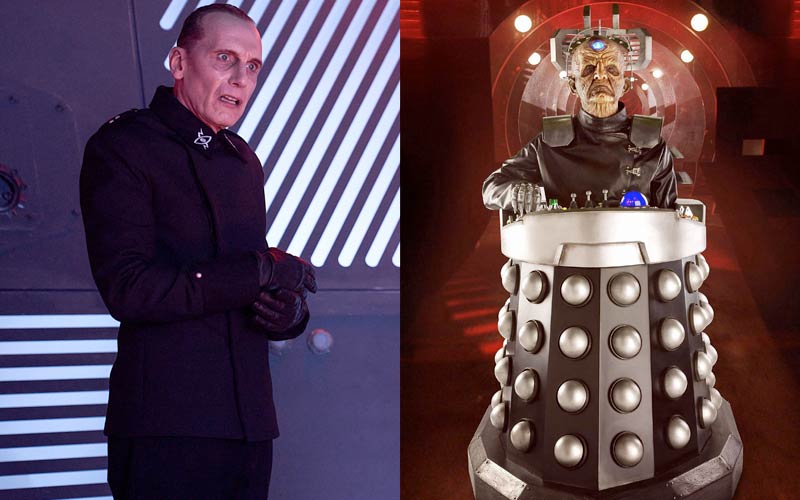
Julian Bleach as Davros in 2023 (left) and 2008 (right).

While I still consider myself a Whovian, I haven’t watched “Nu Who” for several years. To put it succinctly, Chris Chibnall was Doctor Who’s worst showrunner ever, and Jodie Whitaker’s 13th Doctor has proven to be as unlucky as her numbering. That’s why I had some hope when Russell T Davies, the man who successfully revived the franchise in 2007, was announced to be returning, although I found the return of David Tennant to be a desperate gimmick to bait the show’s lost audience into coming back. Still, I was willing to give it a chance.

Not anymore.

The 2023 Children in Need special.

Recently, a Children in Need special was published on YouTube that shows an able-bodied and unscarred Davros, the iconic creator of the evil Daleks. While I thought the special’s comedic tone toward the “genesis of the Daleks” undermined the threat of the Doctor’s archenemies (a whole blog unto itself), fans, including myself, assumed Davros looked like this because it was a prequel, but Davies revealed this will be Davros’s look going forward.

In his own words:

We had long conversations about bringing Davros back, because he’s a fantastic character. Time and society and culture and taste have moved on, and there’s a problem with the old Davros: he’s a wheelchair user who is evil. I had problems with that. A lot of us on the production team did too, associating disability with evil. Trust me, there’s a very long tradition of this.

I’m not blaming people in the past at all, but the world changes. And when the world changes, Doctor Who has to change as well. So we made the choice to bring back Davros without the facial scarring and without the wheelchair – or his support unit, which functions as a wheelchair.

I say, this is how we see Davros now. This is what he looks like. This is 2023. This is our lens. This is our eye. Things used to be black and white; they’re not anymore. Davros used to look like that, and now he looks like this. We are absolutely standing by that.

Ignore Davies’ hypocrisy of create a villain who was motivated to make Cybermen so he could develop technology to get him out of a wheelchair. I’m here to show that he is missing the point.

It’s well-documented that the Daleks were inspired by the Nazis. These pseudo-cyborgs were created in the 1960s by filmmakers who still had fresh memories of World War II. Davros first appeared in 1975’s “Genesis of the Daleks,” which was written by Dalek creator Terry Nation. In keeping with the Nazi inspiration, Davros bears mannerisms often associated with Hitler and the SS. (In fact, he reminds me of Peter Sellers’s Dr. Strangelove, only not satirical). He is blind and disabled due to constant eugenic experiments he, in true mad scientist fashion, conducted on himself. This eventually led to the creation of the Daleks. In other words, Davros being confined to a wheelchair is a consequence of his attempts to make a master race.

The problem is Davies is concerned with optics. The image of a villain in a wheelchair, he fears, will make the audience assume all disabled people are evil. This ignores the clear origins of and creator intentions for Davros. His disability was self-inflicted and motivated by racial supremacy. So, by curing Davros to avoid “ableism,” Davies is removing the consequences of a far greater evil and disrespecting the creators who came before him. He has made a Nazi pastiche look more like the so-called “Aryan ideal.” Doesn’t this validate that evil ideology? Isn’t it, in some bizarre way, actually ableism?

If Davros must be able-bodied to avoid portraying disabled people as evil, then other iconic villains must be changed to remain consistent. Villains like:

  • Doctor Doom, who has a disfigured face.
  • The Weird Sisters of Macbeth, who are blind.
  • Freddy Krueger from A Nightmare on Elm Street, who is a burn victim.
  • Baron Harkonnen from Dune, who is morbidly obese.
  • Darth Vader, who is a burn victim, an amputee, and an asthmatic.

In all of these cases, these disabilities are the consequences of their evil actions and often motivate the evils they are now committing. We fear them because they’re stark representations of the true face of evil and its consequences (and also the fear of the unnatural or abnormal, but that’s a blog for another day). Removing these disabilities fundamentally alters the characters to the point that they are no longer those characters. It also implies that only “perfect” or “able-bodied” people can be evil, trading one prejudice for another.

There are plenty of counterexamples with disabled heroes. Characters like Marvel’s Daredevil (blind), Zatoichi the blind swordsman, Jonah Hex (disfigured face), and even Spawn (burn victim). Characters like them either use or overcome their disabilities; their disabilities motivate them to be heroic. In other words, it boils down to virtue vs. vice. Contrary to popular belief, these are not exclusive to particular groups. As a Christian, I believe “all have sinned and fallen short of the glory of God” (Romans 3:23), which means all people are on equal ground before the Almighty. Sadly, we will in times that deny this reality. Instead of understanding the deeper motivations and philosophies at work in disabled villains (and heroes), creators look only at the surface and/or see them as representative of entire groups of people instead of as representatives of themselves. It’s the definition of “shallow.”

All that to say, I won’t be watching the new Doctor Who anytime soon.

Why the Doctor Shouldn’t be a Woman

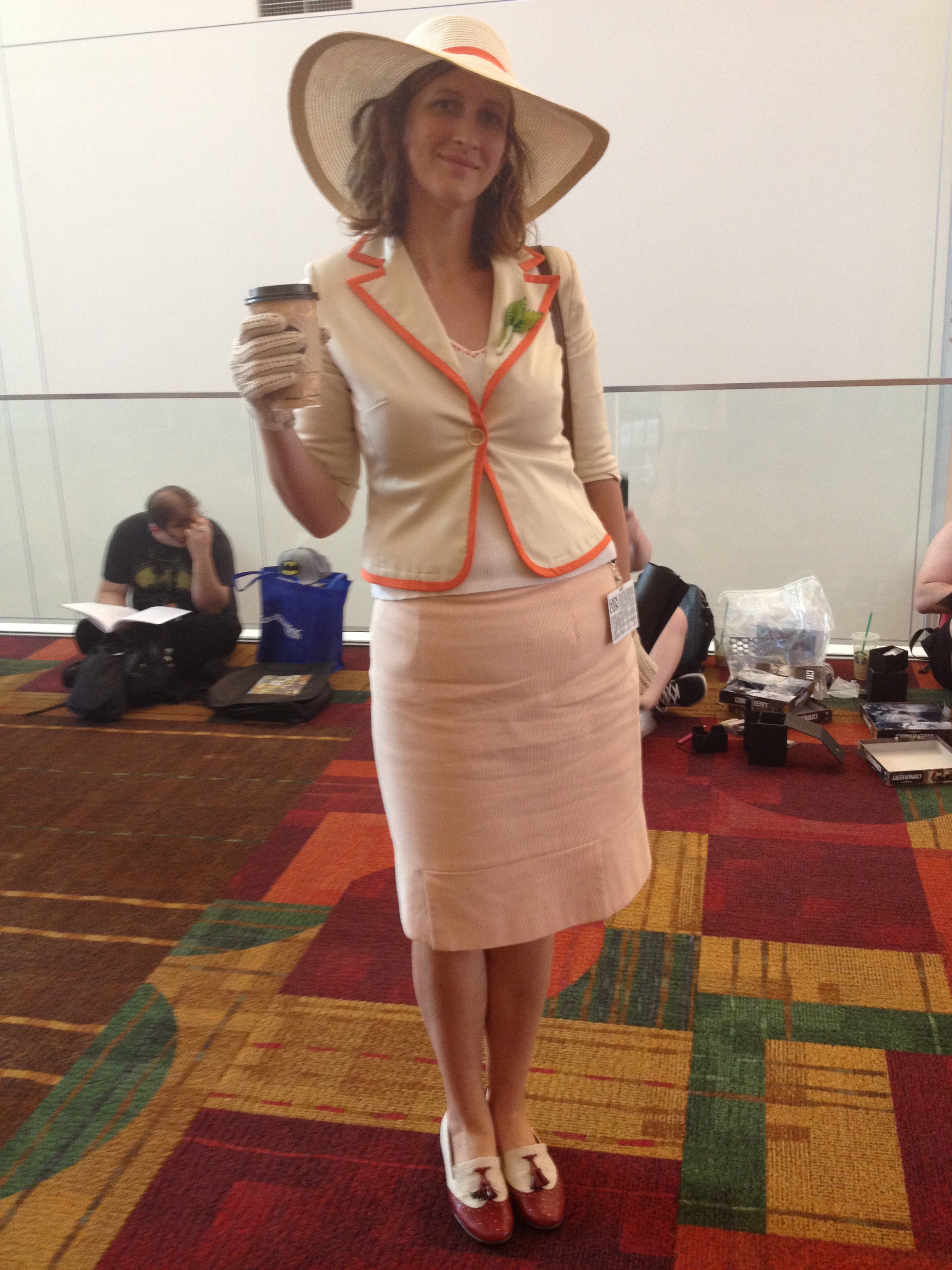
A female Fifth Doctor from Gen-Con 2014. (FYI: I'm not against women cosplaying the Doctor. It's cute).  (Photo by Nathan Marchand)
A female Fifth Doctor from Gen-Con 2014. (FYI: I’m not against women cosplaying the Doctor. It’s cute).
(Photo by Nathan Marchand)

My apologies, fair readers, for neglecting to blog last week and for posting this one late. I was busy last week, what with the holidays and giving a science fiction presentation last week at the Roanoke Library. Perhaps I’ll post two blogs this week to make up for it.

I’d originally intended to write about something else, but with the brewing, well, brouhaha over this topic, I felt I should say something. If you’re not a Whovian (fan of Doctor Who), feel free to skip this post. It’s one of my favorite franchises, so I felt I should give my thoughts on the matter.

Recently, some fans have been clamoring for a female Doctor. At the risk of sounding sexist and/or misogynistic (FYI: I am neither), this is a bad idea. Here my reasons why.

1) It’s motivated by political correctness

No matter what showrunner Steven Moffat or anyone else says, the big reason this is getting pushed is because of political correctness. The Doctor has been male all his life. Making him a woman is nothing more than an attempt to placate an outspoken minority of women (and possibly feminists?) who, apparently, think they need to be represented by the character. It’s stupid, perhaps even insulting. It assumes women can’t enjoy a good story unless it features a female character(s). The Hobbit films made the same mistake adding a lady elf to the cast who wasn’t in the book because they thought it’d attract a female audience. The truth is that a good story can and should be enjoyed by everyone regardless of the characters’ ethnicity, age, and/or gender. Making the Doctor a woman because it might appeal to a female audience is shortsighted.

2) Gender is not interchangeable

I could be wrong on this, but I wonder if making the Doctor female is at least partially inspired by this modern notion that men and women aren’t that different (other than their “plumbing”). This idea is, in general, false. The differences between men and women go beyond reproductive organs and hormones. There are huge differences emotionally, mentally, and psychologically. Men and women think differently. Gender and sexuality isn’t some tabula rasa (“blank slate”). Much, if not most, of it is innate. There seem to be exceptions because of the corruption of sin. God created mankind male and female (Genesis 1:27). (I realize I’m talking about fictional aliens here, but its born out of ideas related to humans). To suddenly switch that is an insult to both genders.

3) Ruins the “romantic” appeal

I was chewed out a bit in a Facebook group for saying this, but I know this is true. One of the appeals of Doctor Who (particularly the new series) is that it’s a romantic fantasy. A handsome and mysterious man who comes to young women and offers to take them on fantastical adventures. While not every Companion falls in love with the Doctor (precious few don’t on the new series), this appeals to men because they want to be the man who leads the adventure, and women want to be taken on adventures. By making the Doctor a woman, this dynamic is ruined. Either she asks (or drags) men on adventures, which won’t appeal to a male audience, or she’ll ask other women to join her, effectively making the show a “chick flick,” thereby alienating the male audience. This sounds harsh, but it’s reality.

4) It’d alienate old-school fans

Doctor Who has been around for over 50 years. Like it or not, that means the franchise has built traditions, and those aren’t easily broken. One of those is the Doctor being male. By changing that, many, if not most, longtime fans who’ve been watching since the days of Tom Baker (or longer) will abandon the series. It wouldn’t be the show they loved. It’s hard enough keeping people on board after the Doctor regenerates—adding a gender swap would be killer.

5) More backlash if and when “she” regenerates back into a man

The flipside of the issue would be the backlash that would probably come if and when the hypothetical female Doctor regenerated back into a man. You can bet accusations of sexism would get thrown around. Feminists would probably say something about the show going back to its “chauvinist roots.” If this was being done because the female Doctor wasn’t well-received and, much like what happened with Colin Baker in the 1980s, she was being quickly replaced, this controversy would kill the show.

6) Female versions are usually either new characters or reboots

Gender swaps have been done before with traditionally male characters, but in most of those cases those were either brand new separate characters or part of a reboot. For example, in the mid-2000s, Clint Barton, aka Hawkeye, seemed to die at the end of “Avengers Disassembled,” a tragic storyline published by Marvel Comics. A young woman who had admired Barton then took up his name/mantle and became a superheroine in his honor. Or when SyFy rebooted  Battlestar Galactica, Starbuck was a woman. The former worked well and the latter, while weird, also worked for most people. But since the 12 (or 13, depending on how you look at it) incarnations of the Doctor are technically the same person, it wouldn’t get a pass. Now, if the Doctor passed on his name to a worthy Time Lady as his dying act, I think fans could support that. (Sidenote: Ever seen a traditionally female character becomes a man?)

7) Difficult to write (and cast?) well

I’m not saying a female Doctor wouldn’t have the Doctor’s trademark quirks and witticisms, but I’d argue the usual challenges faced with recasting the Doctor—age, appearance, costume, etc.—would be worse and judged more harshly. If a young actress is cast, will that alienate older fans? Should she dress and/or act sexy? Some fans already object to how some the female Companions have been eye candy, so you can bet there’d be an uproar if the same happened with a female Doctor. Her every word and action would be scrutinized. (This isn’t to say there aren’t any actresses out there who play the part, though).

8) Need more nonviolent male heroes

As someone pointed out on the Fans For Christ Facebook page, one of the things that makes the Doctor great is he is an nonviolent hero. Most other famous fictional heroes—James Bond, Superman, Aragorn, etc.—distinguish themselves in battle. They aren’t bad characters, but the Doctor differentiates himself from them by using his intelligence and wits to save the day. This is a great thing for boys to see and admire so as to remember that not everything can be solved through violence.

9) Oversteps the limits of regeneration

While the concept of regeneration has been around since the First Doctor, the rules surrounding it have been murky. Except for a few throwaway lines implying a gender swap was possible through it, it never happened until this season when it was learned the villainous Master had become a woman (I argue this is open to interpretation). Regardless, I say a gender swap is beyond what regeneration can do. It makes sense that things like hair color, eye color, and body build can change because that’s still using the basic building blocks available. Swapping genders means adding whole new organs, glands, and hormones. In other words, it’s going from a renovation to a complete teardown and rebuilding. That’s ridiculous, even for Doctor Who.

10) Lesbianism (or Bisexuality)

As said, a staple of the new series has been Companions falling in love with the Doctor (to date only one hasn’t). If the Doctor becomes a woman, would she still have her old attractions, or would they switch too? Doctor Who is a family show, and despite Britain having a liberal definition of what constitutes such a program, I doubt a lesbian or bisexual Doctor would be deemed acceptable. Yes, there have been oblique pro-gay lines in the series sometimes, but most of those go over kids’ heads. And yes, there was Captain Jack, but even he wasn’t allowed to go full-throttle homosexual on Doctor Who (that was saved for Torchwood, which was an adult show). Again, it’s asking for trouble.

These are purely my opinions. You are welcome to disagree. If you’re a Whovian, I’d love to hear your thoughts on this subject, whether you agree with me or not. Please leave comments so we can discuss it.

I’m Starting an American Version of ‘Doctor Who’!

You’ve probably been wondering where I’ve been the last few weeks. Well, I’ve been a busy fanboy. I decided to utilize the connections I’ve been making in the writing world—most notably Jonathan Maberry—and you won’t believe what I managed to do. I convinced Steven Moffat, the showrunner for Doctor Who, to let me make an American version of the show!

A promotional title card for the series.

A promotional title card for the series.

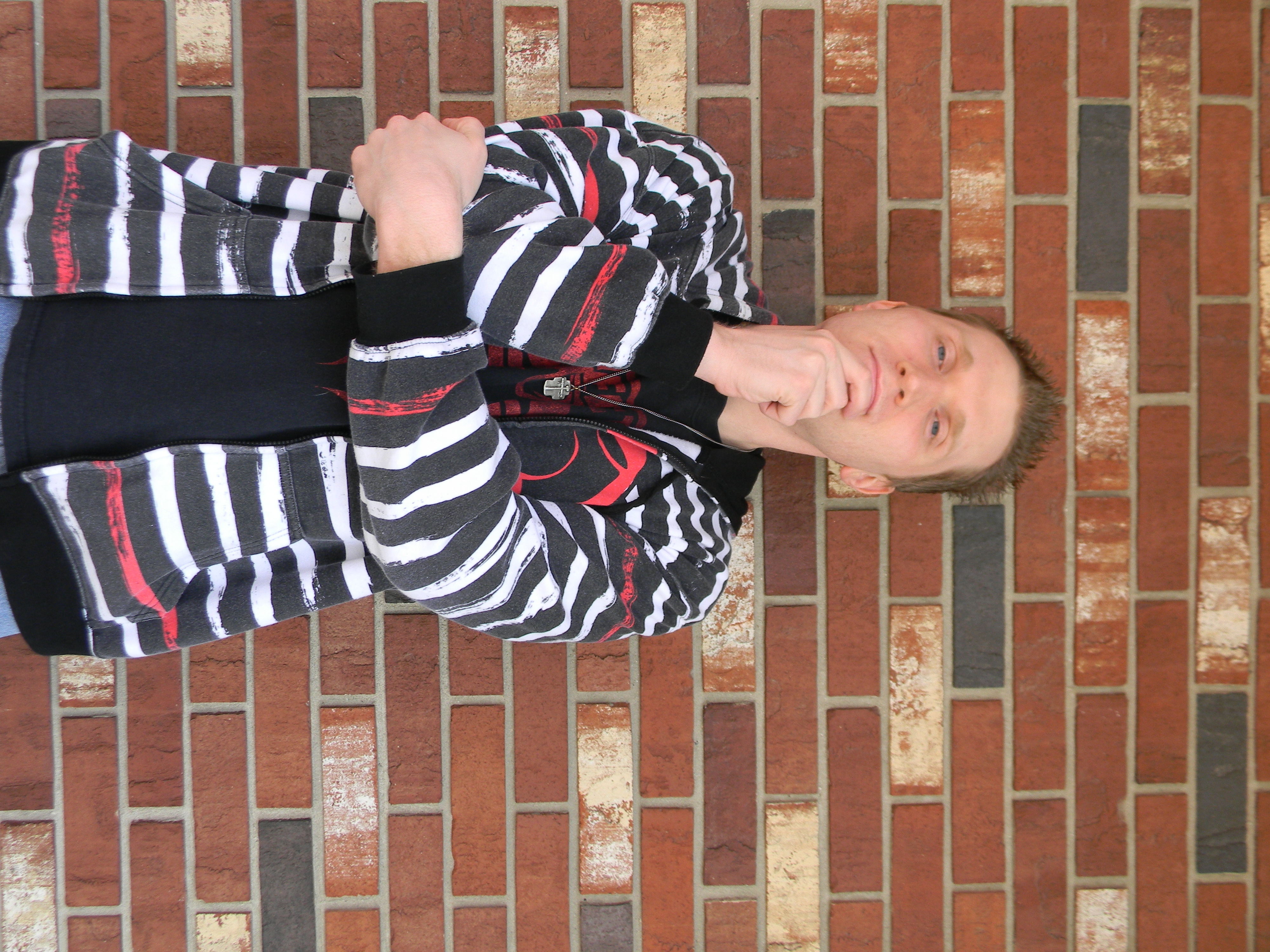
First, I must say that I was honored that “the Grand Moff” took time out of his busy schedule (what with Peter Capaldi filming his first season as the Doctor) to talk to me. I told him about a Buzzfeed article (and subsequent video) published a few months back where a fan mused about the equivalent American actors who could’ve played the Doctor had the show been an American production. This inspired me. I was a longtime Whovian and had written the pilot for what I thought would be a respectful American remake of Who. The episode was entitled “Bigger on the Outside.” The episode would start in the 1960s, and the TARDIS would be a phone booth. He said he’d look it over. A few days later, he called me and said he loved the script and so did BBC. Obviously, my jaw dropped. “This might distract the fans from hating me,” he said. I immediately started talking about casting. I told him my friend Scott Klaus, an even longer-time Whovian, would be perfect, but then Moffat threw me a curveball. “You should be the American Doctor!” he says. “What?!” I blurt. He says Mr. Maberry referred him to my Facebook page, and he liked the photo of my Tenth Doctor cosplay. But what convinced him I should play the part was this photo:

"Dude, you could play Dr. Who!" (Photo by Sergio Garza)
“Dude, you could play Dr. Who!” (Photo by Sergio Garza)

He took one look at that and thought, “He can play the Doctor, too!”

I tried to tell him I wasn’t cool enough to be the Doctor, but he would hear none of it. He was already talking with executives at BBC America and the SyFy Channel about the show. “A thirteen-episode season should be enough, right?” he asked. “Um…sure…” I replied.

Looks like I finally got my big break, True Believers! The writer and star of my own science fiction TV series!

Whether it’s picked up by BBC America or SyFy, the show will premiere April 1, 2015.

As my favorite Doctor always said, “Allons-y!”