Tag Archives: nathan marchand

Flame On! (or “Going Stir Crazy!”)

Be careful what you delete from your laptop thinking its malware—it may be a $100 mistake.

A few weeks ago, I did just that. My laptop had been running slow and bombarding me with pop-ups. I went into control panel and deleted any programs I didn’t recognize. I restarted the computer, but I got the newfangled “blue screen of death.” I called a comic/hobby/computer shop in Columbia City, Indiana, to have it repaired. I’ve been going to that place since high school and knew everyone there, but I had never utilized the computer repair service before.

That was nearly two weeks ago. Apparently, I deleted a recovery partition, and fixing the thing is proving to be more difficult than they expected. (So they say. Other techies I’ve talked to say it shouldn’t be such an issue).

This has put quite a damper on my writing. I have several half-finished projects still on the thing’s hard drive (thankfully, I backed most of it up on a portable hard drive). I also have a few videos I want to make. Now, I can use my local libraries’ or friends’ computers, but that isn’t always convenient. As for writing, it’s been suggested I write it shorthand. I’ve done this before, but I must admit I like the immediacy of having it saved on the computer so I don’t have to transcribe it later. (Makes me wonder how old-timey writers could write multiple drafts before the advent of PCs!)

I’ve felt unproductive, for the most part, the last two weeks. It drives me crazy. Despite hanging out with some friends, I feel like I’m wasting time. Perhaps I’m a closet workaholic (I hope not). It’s like a weird version of cabin fever.


(Gotta love the Muppets!)

More likely, it’s because I have all these things to say, all these stories to tell, and I can’t get them out of me.

In college, my friend and fellow writer Keith Osmun shared a Bible passage with me he called “the writer’s verse.” It goes, “But if I say, ‘I will not mention His word or speak anymore in His name,’ His word is in my heart like a fire, a fire shut up in my bones. I am weary of holding it in; indeed, I cannot” (Jeremiah 20:9).

Now, I’m not about to put my writing—or anyone’s writing—on par with Scripture. However, it does describe most writers, especially Christian writers. God made us storytellers. He blessed us with talent and ideas. If we keep them in, we would burst like overfilled water balloons. In Jeremiah’s case, it was like containing an internal inferno. It will eat us up inside until it is released. Since I’ve temporarily lost my primary means of release, I’m about to lose my mind. No wonder most writers are neurotic.

Anyway, that’s another reason I’ve been quiet—too quiet—on the site. I meant to write something about why I’m not participating in National Poetry Writing Month this year, but that will have to wait.

Until then, fellow writers, be like the Human Torch and “Flame on!”
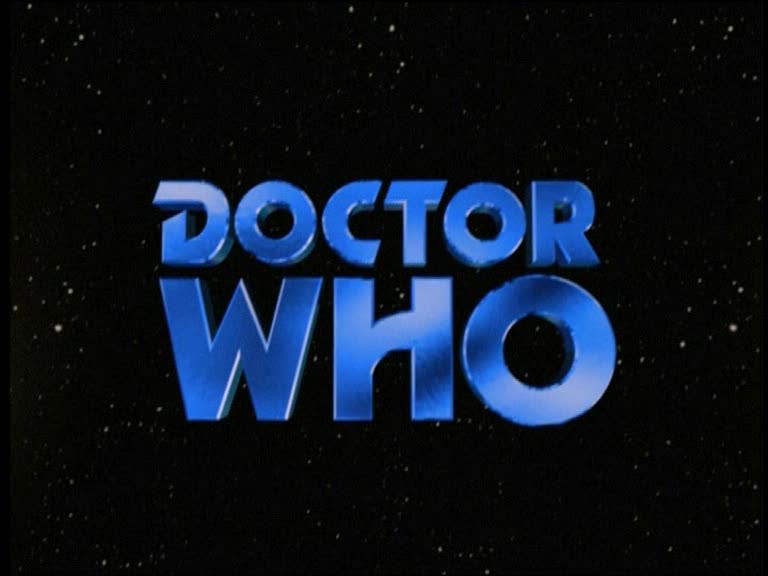
I’m Starting an American Version of ‘Doctor Who’!

You’ve probably been wondering where I’ve been the last few weeks. Well, I’ve been a busy fanboy. I decided to utilize the connections I’ve been making in the writing world—most notably Jonathan Maberry—and you won’t believe what I managed to do. I convinced Steven Moffat, the showrunner for Doctor Who, to let me make an American version of the show!

A promotional title card for the series.

A promotional title card for the series.

First, I must say that I was honored that “the Grand Moff” took time out of his busy schedule (what with Peter Capaldi filming his first season as the Doctor) to talk to me. I told him about a Buzzfeed article (and subsequent video) published a few months back where a fan mused about the equivalent American actors who could’ve played the Doctor had the show been an American production. This inspired me. I was a longtime Whovian and had written the pilot for what I thought would be a respectful American remake of Who. The episode was entitled “Bigger on the Outside.” The episode would start in the 1960s, and the TARDIS would be a phone booth. He said he’d look it over. A few days later, he called me and said he loved the script and so did BBC. Obviously, my jaw dropped. “This might distract the fans from hating me,” he said. I immediately started talking about casting. I told him my friend Scott Klaus, an even longer-time Whovian, would be perfect, but then Moffat threw me a curveball. “You should be the American Doctor!” he says. “What?!” I blurt. He says Mr. Maberry referred him to my Facebook page, and he liked the photo of my Tenth Doctor cosplay. But what convinced him I should play the part was this photo:

"Dude, you could play Dr. Who!" (Photo by Sergio Garza)
“Dude, you could play Dr. Who!” (Photo by Sergio Garza)

He took one look at that and thought, “He can play the Doctor, too!”

I tried to tell him I wasn’t cool enough to be the Doctor, but he would hear none of it. He was already talking with executives at BBC America and the SyFy Channel about the show. “A thirteen-episode season should be enough, right?” he asked. “Um…sure…” I replied.

Looks like I finally got my big break, True Believers! The writer and star of my own science fiction TV series!

Whether it’s picked up by BBC America or SyFy, the show will premiere April 1, 2015.

As my favorite Doctor always said, “Allons-y!”

Waiting

Image courtesy of www.Gigaom.com

I (usually) have the patience of a saint, but even a saint has his limits.

While things like the Internet and self-publishing have given writers greater opportunities for instant gratification, the writing life remains the slowest business in the world. A writer must have patience, among other things, or else he will give up early in the race. I know this firsthand. It took at least six months longer than normal for Hades Publications to pick up Pandora’s Box, and even then it was because I pestered them to the point of a restraining order. It takes time for editors to rummage through manuscripts and separate the wheat from the chaff. Then that “wheat” must be threshed (i.e. edited).

Lately, I’ve felt like my life and especially my career have been in a holding pattern. I’ve tried to contact publishers about writing for them; agents about representing me; and artists about creating artwork for self-published books. Many of them take a while to respond, if at all. I joined a freelance writers group, but was put on the waiting list since there aren’t any openings right now. I tried to sign up for this year’s Writers’ Corner at Gen-Con, but it filled up fast, so I was—you guessed it—put on the waiting list. There’s no guarantee I’ll return as a merchant to the convention this year. 🙁 I’ve also been considering going to grad school, but due to a combination of ignorance and tarrying, I may have to postpone that until next year.

This drives me crazy because I am a man of action. When I set my mind to do something, I do it. Unfortunately, I can only do so much. Eventually, I must let someone else, like an editor, do his job before I can continue. On the other hand, I’m not immune to the sting of failure. Past disappointments have paralyzed me; made me hesitant to forge ahead. It’s hard to move when you haven’t any momentum. Perhaps my difficulty with beginnings goes beyond writing stories.

I began 2014 with the goal of trusting God more. Little did I realize that like Morgan Freeman’s God said in Evan Almighty would be true: “If someone prays for patience, you think God gives them patience? Or does He give them the opportunity to be patient?” Patience, like most things, requires trust. In order to foster both, one must have opportunities for them. An athlete can’t develop muscles unless he exercises. So it is with developing virtues.

I say all of this to say that, perhaps, these holding patterns are God’s ways of answering my prayers. I may not like it, but in the end, it will be the best thing for me.

As the old saying goes, “Good things come to those who wait.”

However, I think my favorite Bible verse says it better: “But they that wait upon the LORD shall renew their strength; they shall mount up with wings as eagles; they shall run, and not be weary; they shall walk, and not faint” (Isaiah 40:31 KJV).

Breaking Down the Wall

I shouldn’t be writing this blog post. No, really. I have a short story whose deadline is the end of next month. It’s for an anthology a fellow writer is assembling. I started it last night. I should be working on that. Why am I not? I’m stuck. Call it “writer’s block,” if you want, but I can’t get the story going.

Every writer, if he’s honest, will admit that while he loves the craft, there is always a part of writing that is most difficult for him. Personally, I’ve noticed I usually have the most trouble starting a story. This isn’t always true (I drilled out last week’s flash fiction in less than 30 minutes, I think), and sometimes I overcome that initial difficulty faster than others, but it still tends to be the hardest point in a story for me. The ideas are swirling in my head like overzealous bees locked in a hive, but when I stare at that blank page, silence falls. (Gotta love unintentional Doctor Who references). Suddenly those bees don’t want out. I managed to crank out a few hundred words, but it was a chore and I hated most of them.

However, when I get past that initial “block” and find the story’s rhythm and voice—it’s like dancing with a whirlwind. Characters come alive; descriptions jump off the page; and settings envelope my mind’s eye until they become my mini-world. It is glorious! I live for times like that. All writers do.

But in order to get into that “zone,” I need to break through that first wall. Some days I can smash through it like Superman (which is funny because I have a Supes costume—maybe I should wear it during those hard days!). Other times, I’m a mere mortal who bruises his shoulder while constantly running into the wall hoping to find a weak spot. Regardless of whether I smash through the quickly or not, it’s a triumph, for out of the white-hot throes of creative energy a new story is birthed. This one I’m working on in particular is one I’m excited about. I just need to get break down the wall.

Now, where’s my Superman costume? 😛

What’s your “wall” in writing? Let’s discuss it in the comments.

Nothing Bad Happens to a Writer

In college, my writing professor shared an interesting quotation with his students (a line I’ve just learned was said by novelist Philip Roth): “Nothing bad happens to a writer. Everything is material.” I didn’t take it too seriously at the time. It just seemed like an extension of the old writer’s mantra, “Write what you know.”

Not long after that, Taylor University Fort Wayne (my alma mater) was visited by Jerry B. Jenkins, author of the then-popular Left Behind books. He gave a special lecture to all the students of the communications department. One thing he said has stuck with me in the decade since. He admitted that he’d had a comparatively “easy” life—and lamented that that meant his “writing well” wasn’t as deep as others’. I was surprised by this, to say the least. Not that I was a huge fan of his writing (I tried reading the first Left Behind book and got bored after two chapters), but it seemed a little strange.

I don’t like getting too personal on this site. I had a blog for that for a long time (not anymore), but I often thought I revealed too much there. I like maintaining a certain level of privacy, especially since I’m in a position to become a public figure.

That being said, I’ve faced the greatest trials of my life since college. I’ve struggled to find work. I’ve lost jobs. I’ve had several painful break-ups. I’ve scraped by on little money. That’s just a few of my tribulations.

Twice I’ve gone to a pastor I’ve known all my life for counseling. I don’t mean I saw him on two occasions—I mean I’ve twice gone to him once a week for several months. During both of those times, he told me the same thing: “I think this is to make you a better writer.” I was frozen in shock. On one hand, I wanted my suffering to end. On the other, I wanted to be a better writer.

If you study an artist’s works enough, you can get to know them. His worldview bleeds through. His thoughts, emotions, and philosophies are the metaphysical raw materials he uses to create the work. People gravitate toward certain artists or works because they can identify with them; they have a kinship with them, just like they would with friends and family.

For example, I identified with Clark Kent from Smallville because for a long time I felt like that show was a superhero version of my life. Clark was raised with old-fashioned values in a small Midwest town; he had trouble talking to the girl he liked; he was betrayed by his best friend (Lex Luthor); and he often suffered for doing the right thing. (I won’t say more for the sake of privacy). I doubt that show would’ve had the potency it did unless the creators had experienced similar things themselves. You can’t fake something like that.

The same is true of my own stories. I often use them to try to make sense of my own life. I fill them with disguised versions of my own questions, longings, and disappointments. Honestly, I often wrestle with God in them. But this usually happens subconsciously. My journal is where I do intentional (and often Hamlet-esque) introspection. Regardless, I don’t think I would’ve written the stories I have if not for my life experience.

These stories aren’t just for me, though. Heck, I wouldn’t even say they’re primarily for me. They’re for you, my readers. Each one is, in a way, an invitation for you to examine your own life and find answers to your questions. I may not always have answers for you, but they can inspire you to take a journey of discovery. You may see a piece of yourself in one of my characters. You may identify with one of my plotlines. However it happens, consider it a service I offer you besides simple entertainment. (And if that’s all you get out of them, then I helped you escape from your problems for a short time).

Who knows, I may save you thousands in therapy bills.

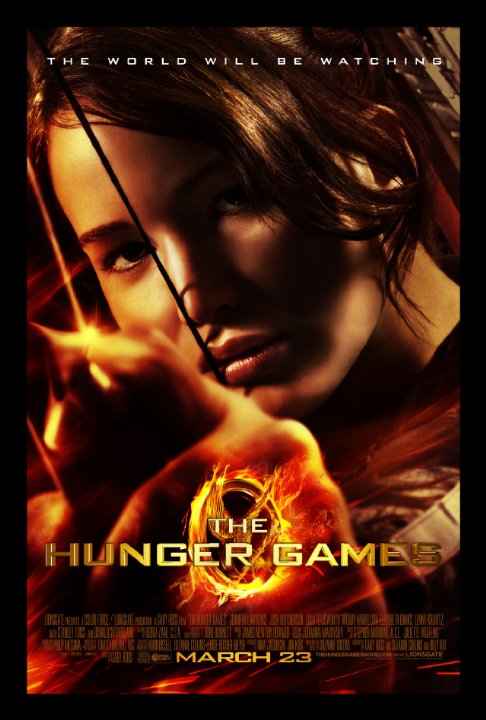
Who Wins in a Fight: Katniss or Pandora?

Image courtesy of www.IMDB.com.
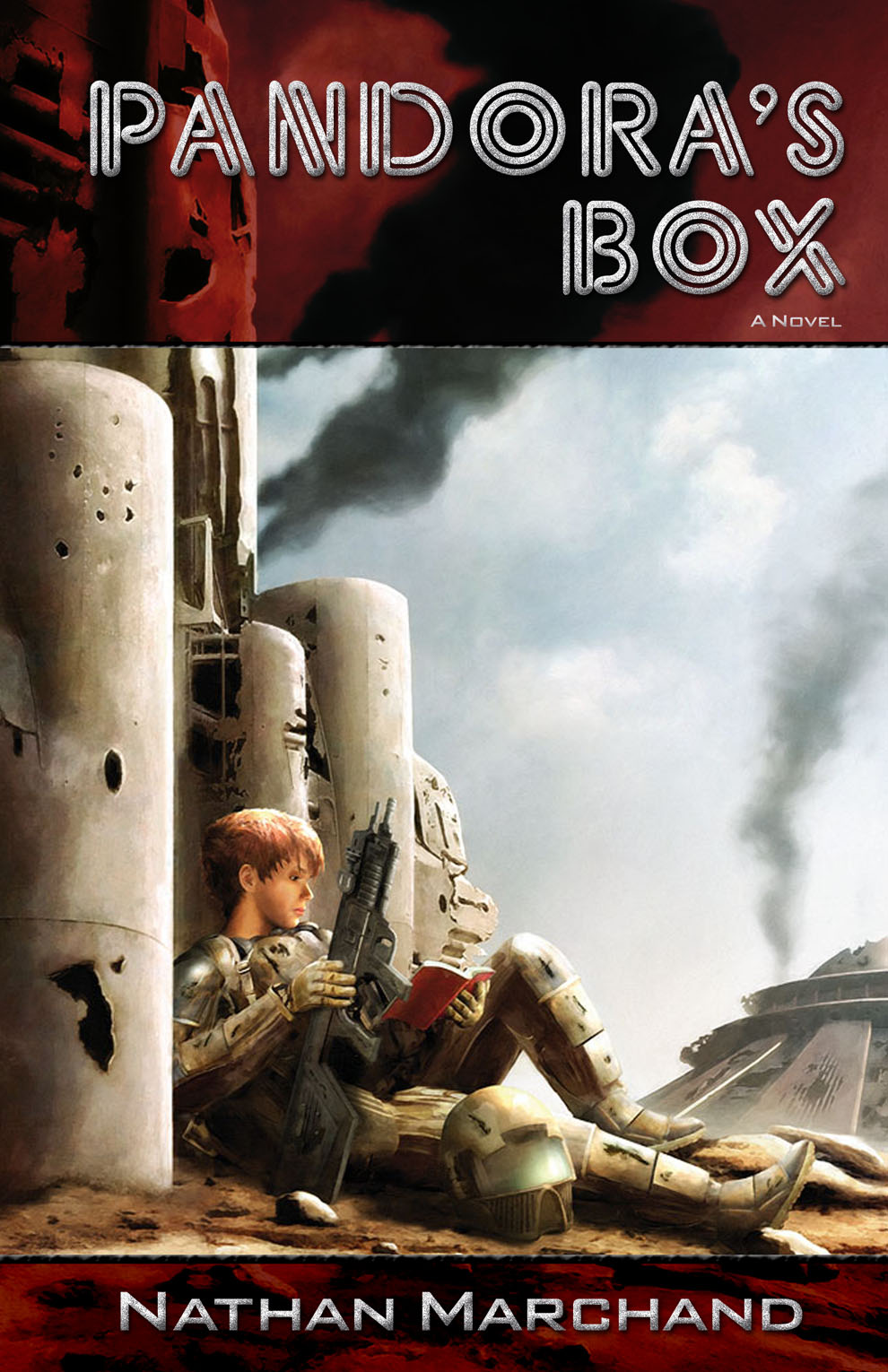
PandorasBox04
Cover art by Tomislav Tikulin.

Expecting a nerdy exposition about whether Pandora Brewer, the heroine of my novel Pandora’s Box, could beat Katniss Everdeen, heroine of Suzanne Collins’ hot Hunger Games books, in a street fight? Then I apologize for the sensational but slightly misleading blog title. (But feel free to debate that with me in the comments).

Yesterday, I received a message from a friend in Virginia who said her pastor’s family came over for dinner and their daughter, an avid reader, discovered my friend’s copy of my novel. She devoured it. My friend asked me to send this girl an autographed copy (we nerds know to take care for our fans). So, fangirl, if you’re reading this, rest assured you will be getting that copy soon! And thanks for reading my book!

This reminded me of an unexpected turn in my young career as a novelist: the fanbase for my novel has tended to be young adults. In other words, the Hunger Games crowd. This astonishes me. I didn’t write Pandora’s Box for them but for a general science fiction audience. Pandora Brewer is in her early-to-mid-twenties in most of the novel (she was a child in one chapter and 18 years old in another). Yet it seems she appeals to fans of Katniss Everdeen. I admit the characters have some similarities, but they’re quite different characters. (I could write an entire blog post on that). What’s equally astonishing is most of the libraries who have stocked my novel have put it in the YA section. I can only think of one off-hand that has put it in the regular science fiction section. My friend Natasha Hayden, an avid reader of YA, would tell you Pandora’s Box doesn’t belong in YA.

As I think about it, though, those libraries may have noticed something I didn’t. I wrote the first draft of this novel when I was 18. I worked on it periodically throughout college, finishing it six to eight months after graduation. In other words, I wrote this book when I was still a member the target audience for YA books. I was reading a few such books at the time, so their influence was undeniable. I could be wrong, but I do think the writing, not publication, of my book predated Suzanne Collins’ epic trilogy. Regardless, all this probably gave my book a YA flavor.

But the best explanation can probably be summarized by something Jonathan Maberry said when I saw him in Maryland several months back: “YA is fearless.” Those books and authors will try anything, no matter how crazy or unorthodox. “Adult” books and authors, he said, are too worried about sticking to formula. In that regard, YA authors are my kindred. I tend to ignore trends and conventions. I just want to tell my stories. I want to be original. I’d rather be a trendsetter. (Probably why I have a tough time getting a literary agent).

Perhaps that’s why I’m appealing to this audience: they sense that fearlessness in my writing.

They’ll be excited to know I’m writing a sequel, and its heroine will be a 17-year-old girl. 😉

Besides, comparing my novel to Hunger Games is just good marketing.

(And for the record, I think Pandora can take Katniss). 😛

The Importance of Art

First, before I get my main thesis, I’d like to thank everyone at the Roanoke Public Library in Roanoke, Indiana, for having me give a lecture on fantasy writing last Thursday. It was a small crowd (stupid weather!), but it was fun. I’d love to come back, especially if you have room for one more lecturer.

Since I spent a fair amount of time preparing the lecture and I’m sure some people didn’t come but wanted to, I’m going to expand it a bit and make it into a multi-part series for my vlog, “But I Digress….” Expect the first video soon!

Anyway, as I was going to say…

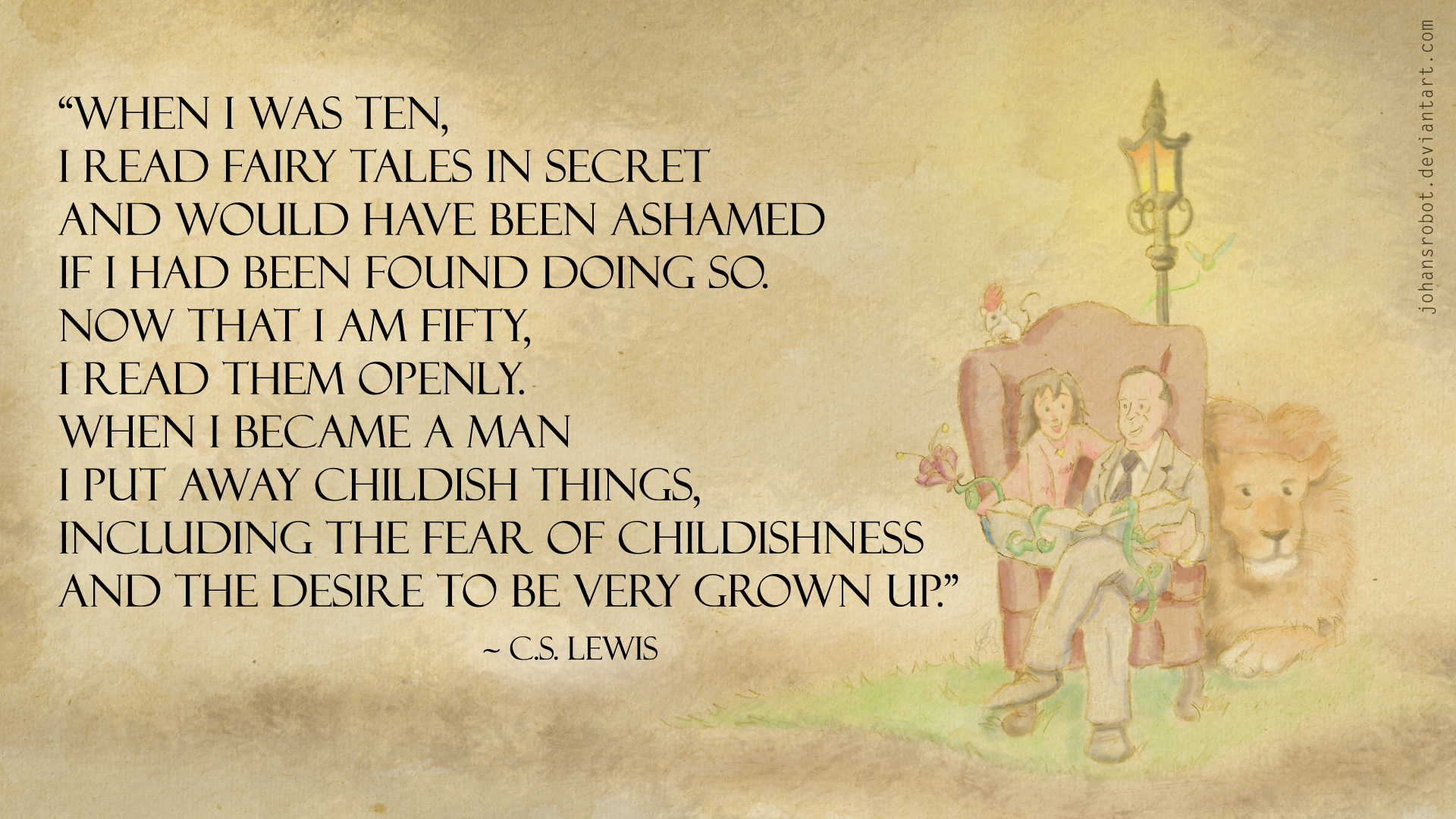
A few weeks ago, I got involved in a short but heated discussion between a friend and her sister (they shall remain nameless) on Facebook. My friend had posted a photo of an angel someone made of snow. Being that we’re both Whovians (“Doctor Who” fans), I commented, “Don’t blink!” (This was a reference to the nefarious Weeping Angels). My friend then went on about how they were also the evil Snowmen from another episode, so you couldn’t look at them or blink. Her sister then commented, saying she looked at the photo and blinked and nothing happened. At first, I thought she was being sarcastic, but I realized she wasn’t. The sister then said she didn’t understand how anyone could be “obsessed” with fictional things like this when real life had more to offer. My friend, myself, and one other person tried to explain things to her. Since I came into the discussion later, I just posted this quotation from my friend “Jack”:

when_i_was_ten____by_johansrobot-d5szt4h
You wanna argue with C.S. Lewis, hmm?

When I hit adolescence, I started getting the feeling that kids my age didn’t watch things like cartoons. That was the age one “outgrew” them. We were supposed to do better things with our time…like chase the opposite sex in a hormone-crazed frenzy and read books like Twilight (how is that book more mature than cartoons?). But guess what? I kept watching the cartoons I thought were good. In secret. Yes, I was embarrassed that I enjoyed watching shows “Beast Wars,” “Spider-Man,” and “Batman: The Animated Series.” I wanted to be seen as mature and grown-up, at least in public. I spent most of teenage years living this quasi-double life. I was quite a serious lad at the time. It took college to lighten me up.

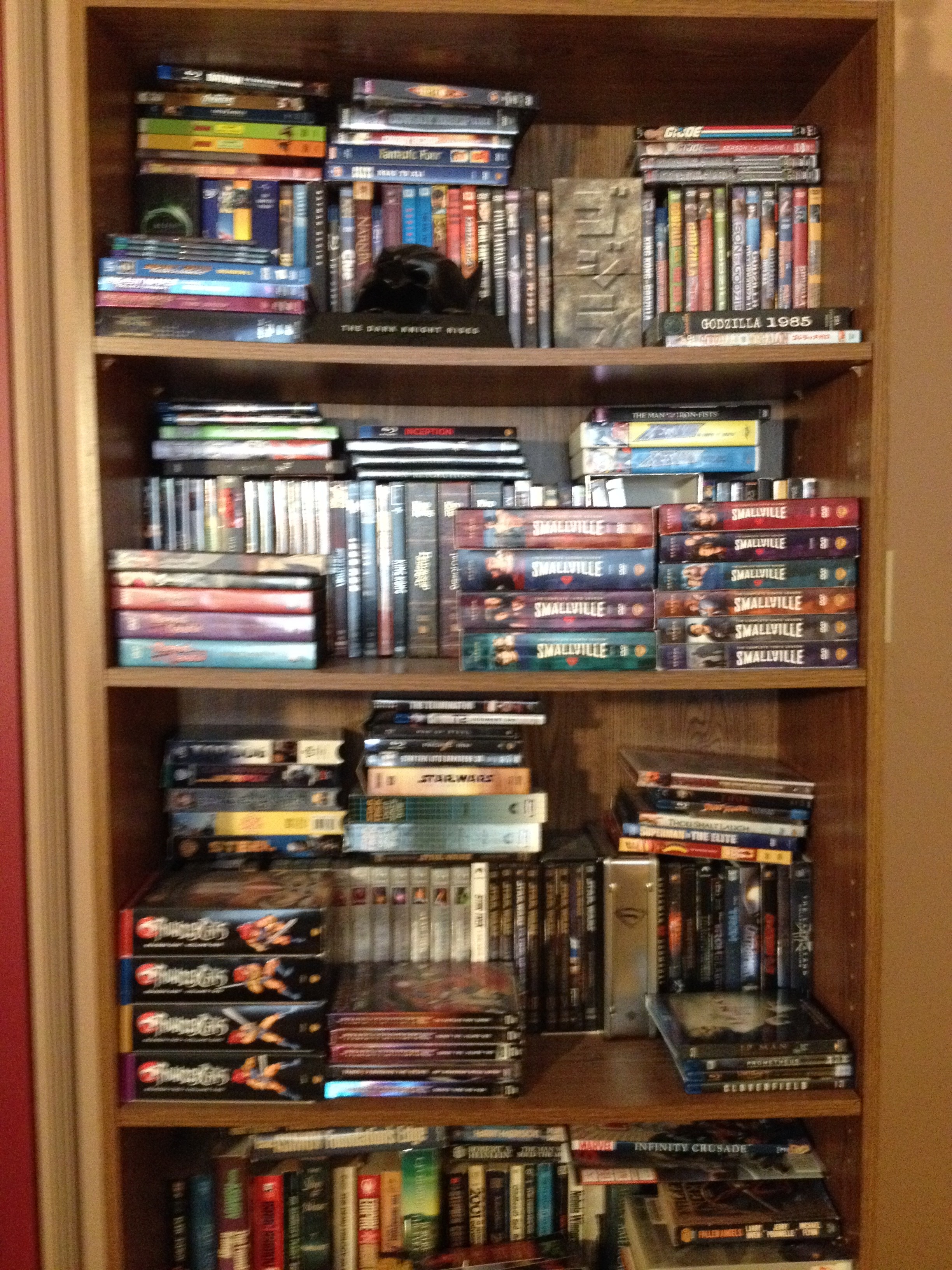
Now I make no secret that I enjoy cartoons, comic books, and other “childish” forms of entertainment. Seriously, look at my video collection:

Yeah, I am such an overgrown boy. :P
Yeah, I am such an overgrown boy. 😛

Part of that is the nostalgia craze that’s been going on for over a decade, which has made these things more acceptable. But there are still those who would look at this and say, “These shouldn’t be on a grown man’s shelf.” They’d cite 1 Corinthian 13:11 as evidence that such a person was immature.

But here’s the truth: only children worry about being perceived as grown-up. Many children at one point or another wished they were adults. They worry about what people will think of them if they “act childish.” With age, however, comes the attitude that what people think doesn’t matter, and the wisdom that true maturity comes from how one treats others and his responsibilities.

Yes, people read comics, watch “Doctor Who,” and play video games as an escape. They’re called “escapist entertainment” for a reason. It’s a stress relief because life is often hard. The problem is when one lets it become an addiction, a source of one’s self-worth. I’ve seen this happen. It’s sad. But anything, no matter how good it is, can become an addiction. There’s a difference between someone who has an occasional sip of wine and an alcoholic.

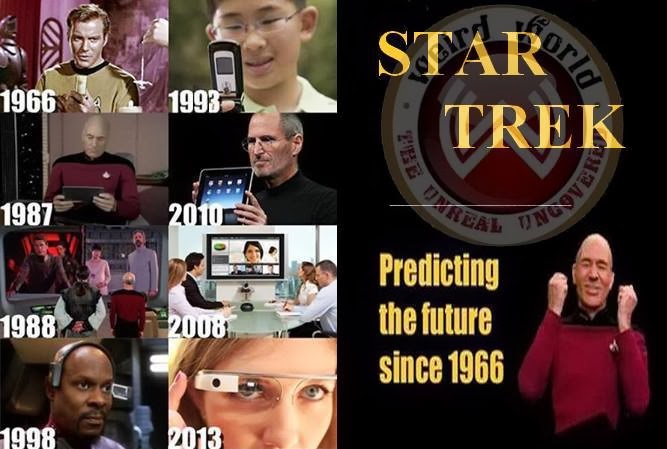
There’s also something to be said about cultivating an imagination. People who are imaginative see things like nobody else. They invent, they create. Ideas are their playthings. Without people like them, we wouldn’t have technology, culture, and philosophies. Heck, I keep hearing stories about how much of the tech seen in “Star Trek” and its spin-offs keeps inspiring real gadgets!

Capt. Kirk inspired your cell phone. Capt. Picard inspired your iPad. You owe them. :P
Capt. Kirk inspired your cell phone. Capt. Picard inspired your iPad. You owe them. 😛

Art enriches our lives. It illustrates truths. It provides a lens that puts life into perspective. It expresses things we might have trouble articulating (hence why most couples have a favorite love song). We see ourselves in all our beauty and ugliness. It gives us ideals to strive for. It expresses our deepest longings.

In other words, it helps us figure out life. And life then in turn enriches art. The two need each other like a husband needs a wife, and vice versa. Without it, there would be no color to life. We would be robots.

Most importantly, art is an expression of being God’s image bearers. God created the universe. It isn’t purely functional. It’s full of color and wonder and adventure. I drove through Pennsylvania and Maryland a few months ago and was blown away by the rolling hills, mountains, and multicolored leaves. I grew up in house that was constantly surrounded by mischievous animals. And need I mention the wonder of the night sky? God is an artist.

Think about that next time you want to criticize someone for being an “out-of-touch child” just because he made his own lightsaber.

A Blizzard and a New Short Story

Hello, True Believers! It’s been a while since I posted something substantial. I was busy during the holidays, as most people were, but I was working on a new short story. I wanted post it as a Christmas gift to all of you, but I didn’t get it done in time. However, it’s now finished. It’s entitled “In Search of Traction.” I had this idea for a while–a guy trying to get home on a cold, snowy day–since college. Now I’ve put a plot to it. I wouldn’t say it’s my best story, but I like it. You can read it here.

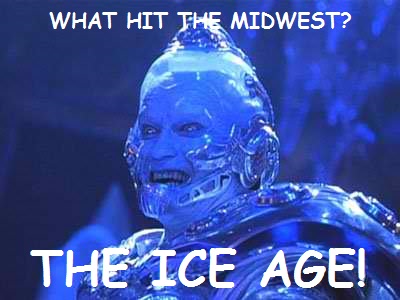
While it takes place at Christmas, it’s still appropriate–perhaps more so–since the Midwest was slammed by the coldest blizzard on record.

My first ever meme, which was inspired by the blizzard of 2014.
My first ever meme, which was inspired by the blizzard of 2014. My apologies if it brings back bad memories.

A foot or more of snow. Below zero high temperatures. Windchills at -40 degrees. It’s insane. I avoided driving during that time (I heard cops could fine someone if they didn’t have a provable emergency), but I heard about many accidents caused by the weather. If that were one of those unfortunate people, perhaps you’ll be able to sympathize with the story’s protagonist.

So, curl up to your fireplace with your laptop and enjoy “In Search of Traction”!