Category Archives: Podcast

Gamera and “Tolkien Moments”

“Gamera Saves Christmas” cover art by Jarod Marchand.

Happy 2026, friends, fans, foes, and everything in between!

It’s been a while since I updated my website, so I figured I should. Starting this year, I’ll be focusing the site on blogs pertaining to my writing, whether that be updates, reflections, or promotions, etc. Other pieces will be saved for the Substack I’m seriously considering launching as one of my New Year’s resolutions. My working title is “The Words of Nathan Marchand, the Mad Millennial.” Stay tuned for more!

Recently, I finally published an overdue Christmas special for my kaiju podcast The Monster Island Film Vault. It’s a fanfic audiodrama entitled “Gamera Saves Christmas.” Yes, a Christmas special about the (usually) corny giant rocket-powered turtle who loves kids. It was a crazy idea my friend Joy Metter gave me, and after several months of co-writing and, at points, even co-directing, we finally got it done. We took it far more seriously than we had any right to do, but that’s how I roll.

The story’s protagonist, an angry teenage girl named Susan, has a crisis of faith when she’s whisked away to the North Pole, where she meets Santa Claus, Mrs. Claus, Krampus, and a kaiju reindeer (you read that right!), among other things, and learns that Gamera is, in fact, still alive despite a suicide attack on an alien spaceship in 1980. Belief and faith might seem like obvious themes for a Christmas story, and honestly, I thought that, too, for most of the production. But while I was scrambling to edit the hour-long drama, I experienced what I can only call “Tolkien moments” several times.

While hearing my sister, Sarah, perform as Susan after I added music to the scenes, I got weirdly emotional. The most intense one came toward the end where (SPOILER WARNING!) she takes Santa’s magic Wreath to Gamera to revive him. Susan gives a speech about her struggles and why she’s now angry that when she needs Gamera most, that’s when he “go[es] and dies” (he was defeated by the aforementioned reindeer kaiju). In desperation, she throws the Wreath at him, and to her surprise, he rises to fight his foe again. It was, as Tolkien famously said in “On Fairy-Stories,” a eucatastrophe. It was the sudden turn where the hero improbably survives. Some would call it the “stand and cheer moment.” But it was also the moment where Susan’s faith is also revived. The “resurrection” of Gamera was merely an outgrowth of that. From there, we had the exciting finale where Gamera battles the reindeer, winning this time, which is made even more potent thanks to this.

Later, I experienced two more “Tolkien moments” in quieter scenes with Susan. One was when she spoke with Santa, who told her to hold onto her what she experienced, even when the concerns of adulthood overwhelmed her. It gave me flashbacks to Aslan speaking with the Pevensie children in several of the Narnia books. Then in the next scene, Susan makes the audiodrama’s thematic statement with its final line after being reunited with her disbelieving parents: “Some things…you just have to take on faith.” Gamera’s roar is heard in the distance as confirmation. Then a kinda corny rock song called “Gamera Always Wins” starts playing. These moments didn’t push me to the edge of tears, but I did feel them in my gut.

I’ve heard some say that J.R.R. Tolkien (and also his friend and fellow Inkling, C.S. Lewis) didn’t create stories so much as he “found” them. In other words, he presented the world as it is and how it operates. To put it even more simply, he showed the truth. Beneath this seeming simplicity are the deeper things of life. What appears obvious suddenly overflows with depth and richness. Tolkien called this “sub-creation,” the act of using the “primary world,” which according to his Catholic faith was God’s creation, to fashion another world. Art has a way of reframing things in unexpected ways that helps us see the obvious in new ways. Suddenly, Susan’s struggle with believing crazy things like Santa Claus and a living Gamera brought to mind those times when I grappled with doubts about my own faith. Contrary to popular belief, it’s rarely easy to hold true to one’s beliefs. But the mere words on the page didn’t affect me. I needed to hear my sister’s performance combined with music to get the full impact. Perhaps I should add “Gamera Saves Christmas” to my short list of kaiju stories that nearly made me cry.

Or maybe I was too invested in the kaiju fanfic audiodrama I was creating to be taken seriously. Ha!

Regardless, you can hear “Gamera Saves Christmas” on MIFV”s website, YouTube channel (see below), or wherever you get your podcasts.

MY FIRST FULL-LENGTH AUDIODRAMA – “Origins: Rito Bandora”

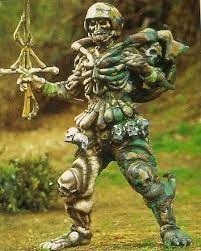
Rito Revolto from Mighty Morphin’ Power Rangers.

In case you didn’t know, I’ve been part of Scyther Podcasts’ stable of actors for a few years now. This is a group run by Karl Dutton that makes fan-produced audiodramas, most notably for X-Men and Power Rangers. While I’ve played (of all people) Deadpool on X-Men: The Audiodrama and as Johnny Storm (The Human Torch) on its spin-off Avengers: The Audiodrama (which is run by Mitch McFarland), my first claim to fame at Scyther was playing the darkly funny supervillain Rito Bandora (aka Rito Revolto in his original incranation) on Power Rangers: The Audiodrama (see image to the right). Unbeknownst to me, Scyther’s Rito became a fan-favorite.

Because of this and some…spoiler-ific events in PRAD, I pitched an idea to Karl to write and produce a bonus episode that expands on the background for Rito that’s briefly discussed in a few episodes of the main show. He approved the outline, and after a few months of drafting the script, I went into production for my first full-lnegth audiodrama. I say, “full-length,” because I’ve produced shorter drama segments on my flagship podcast, The Monster Island Film Vault, but the longest any of those got was about 20 minutes. This special clocks in at 55 minutes. I Mel Gibson’d the snot out of this; writing, directing, editing, producing, and starring in it. I even commissioned my friend Rebecca Hudgens to do the cover art and purchased the rights to a metal song to use as the episode’s theme song. I’ve joked that the episode should be retitled, “Nate’s Vanity Project.”

So, sit back and enjoy this dark science fantasy comedy!

You can also listen to it on Apple Podcasts, Spotify, and wherever you get your podcasts.

Be sure to watch me be interviewed about the background of this special on The Power Chamber Podcast.

All My Podcast Appearances (Feb. 2024)

It’s been five years (crazy, right?) since I updated my podcast appearances for y’all. Being that I’ve (co-)hosted three in almost five years, there are a lot more to discuss! Before I add some more, be sure to read my previous posts here and here and here for my first lists. I’ll do my best to include every appearance, but I may miss one or two. If I do, let me know.

My Podcasts
These include The Monster Island Film Vault, Henshin Men, and The Power Trip: A JOurney through the Power Rangers Franchise.

All My MIFV/Tokusatsu-related appearances
This is a full list of my guest appearances related to my shows.

Strangers and Aliens
GODZILLA: KING OF THE MONSTERS – SA315
June 7, 2019
Just a few short months before I started my own kaiju podcast (again), I was featured on Strangers and Aliens to discuss the second entry in the MonsterVerse.

STAR TREK II: The Wrath of Khan and William Shatner Live – SA401
February 21, 2023
Official description: “Recently, Ben joined his friends William and Nathan Marchand to see a theatrical showing of Star Trek II: The Wrath of Khan, which also had William Shatner do a live stage performance that was sort of a Q&A session. But it was really just an excuse for Shatner to tell some hysterical stories from his long career. For over an hour.”

Up From the Ashes
“Lazarus from the Mist”: THE STARLOST Ep. 2 – UFTA 003
September 21, 2023
I make my first appearance to discuss an episode of an obscure and infamously bad canadian sci-fi TV series from the 1970s.

“The Alien Oro”: THE STARLOST Ep. 7 – UFTA 008
November 2, 2023
In my second appearance, I discuss one of two episodes of The Starlost to feature Walter Koenig of Star Trek fame.

X-Men: The Audio Drama
Season 3, Episode 10: “The Trial of Magneto”
March 23, 2023
After playing Rito Bandora for most of season 3 of Scyther’s Power rangers: The Audio Drama, I make my debut on their X-Men show as, of all people, Deadpool. I’m a post-credit gag.

There’s plenty more forthcoming! Stay tuned!

NEW PODCAST – Episode 13: The Three Treasures (Mini-Analysis)

Hello, kaiju lovers!

The unintentional “epic films month” continues with 1959’s The Three Treasures (aka The Birth of Japan), but thankfully this episode doesn’t cross the “Kurosawa threshold.” This is a religious epic in the vein of Cecil B. DeMille’s The Ten Commandments except it’s about Shinto. It tells the tale of Prince Yamato Takeru (played by the always awesome Toshiro Mifune), the legendary 13th emperor of Japan (who’s being covered in our 13th episode…oh boy…). Interspersed throughout the film are vignettes depicting stories from Japanese mythology that parallel the prince’s life. Nathan zeroes in on several of the film’s story elements, including the Japanese creation myth, the Imperial Regalia of Japan, and Yamata no Orochi the eight-headed dragon. There’s so much that could be said about this film, Nathan may have to do a follow-up with Rev. Mifune (no relation to Toshiro Mifune) or the guys at The Kaiju Apostle.

Nathan then reads yet more feedback clarifying the Batman Meets Godzilla story treatment—or rather, the Twitter war that almost broke out over it.

Speaking of which, Batman Meets Godzilla, one of the craziest yet most intriguing lost projects made famous by John LeMay’s book, The Big Book of Japanese Giant Monster Movies: The Lost Films (which now has a new “mutated” edition), is being adapted into a fan-made comic book miniseries!

T-SHIRT GIVEAWAY: Everyone who shares the Facebook and/or Twitter posts for this episode (or tags the show when they share it themselves) will be entered for a drawing for a Batman Meets Godzilla T-shirt. (One entry per person per social media). Entries will be taken from March 25 to March 31 at 11:59pm (EST). The winner must then send Nathan his/her shirt size, shirt color, and mailing address to be forwarded to the team at Batman Meets Godzilla. Here’s a link to the Tee Public site with this epic shirt.

Here’s the KVR episode: Episode 41: The Three Treasures a.k.a. Nippon tanjo (The Birth of Japan) (1959) (Shinto)

This episode featured the songs “‘BATMAN’ [OG Theme Song Remix!]” by Remix Maniacs & “ULTRAMAN” by Nobuko Toda and Kazuma Jinnouchi.

Join the Kaiju Quarantine Discord server!

© 2020 Nathan Marchand & Moonlighting Ninjas Media

Bibliography/Further Reading:

The Monster island Film Vault, Episode 7: ‘Half Human’ (Mini-Analysis)

I was making so merry for Christmas I forgot to share the latest episode of my podcast here! That will be amended! Enjoy!

Merry Christmas, kaiju lovers!

As part of Nathan’s continuing series on films covered in his absence on Kaijuvision Radio, this mini-sode examines Ishiro Honda’s 1955 film Half Human, which is infamous for being banned by Toho. Heck, it was stashed so far back in the Island’s film vault, it took Goji-kun and Bro Kong (the podcast mascots and possibly Godzilla and Kong’s “little” brothers) a long time to find it for Nathan to watch. Strange as it may sound, it’s serendipitous that this episode was released on Christmas Day because the film takes place partly on New Year’s Day. It follows a group of scientists and students investigating the appearance of the Abominable Snowman in the Japanese Alps, where they encounter a savage tribe who worships the Snowman. Nathan’s analysis focuses on the natives, their parallels to the Ainu (Japan’s indigenous people), and how this portrayal got the film banned. He argues that, despite possible insensitivities, Half Human is unfairly censored and deserves to be viewed by a wider audience.

All this plus our first listener feedback letters and the Monster Island Christmas party—wherein Nathan learns that kaiju can sing Christmas carols (or so his intrepid producer, Jimmy From NASA, tells him even though he hasn’t fixed the ORCA yet).

Here’s the Kaijuvision Radio episode on the film: Episode 38: Half Human (1955) (Genetic Origin of the Ainu People).

Here’s the blog with the rules for the Destroyer novella giveaway.

This episode featured “We Three Kings” by Jay Man (OurMusicBox on YouTube).

See you in 2020, listeners!

#JimmyFromNASALives

© 2019 Nathan Marchand & Moonlighting Ninjas Media

Bibliography/Further Reading

Check out the latest episode of my podcast, where I’m joined by my friend and fellow writer Nick Hayden. Enjoy!

Hello, kaiju lovers!

In the latest episode of the “Kong Quest” (which is finally mentioned by name on the air!), Nathan is joined once again by author and “Golden Ticket Tourist” Nick Hayden of the Derailed Trains of Thought podcast to discuss the wacky but fun King Kong Escapes. Like with the 1933 film, this is Nick’s first time seeing this 1967 Toho classic, which was the second (and sadly last) of Toho’s Kong films, as it was made in the last year they held the rights to the Eighth Wonder. This is a first for the show as it’s the first tokusatsu film directed by the great Ishiro Honda covered on the podcast. It’s a crazy nexus of ideas borrowed from other productions and some that seemed to anticipate others. For one thing, its villain, Dr. Who, is both a derivation and a precursor to the famous British TV series! Nathan and Nick also note some funny connections to Rankin-Bass’ classic holiday special Rudolph the Red-Nosed Reindeer given that they collaborated with Toho on this live-action cartoon.

The Toku Topic is how Toho’s Japanese-American co-productions paralleled Japan-America relations.

Stay tuned after the credits for a Marvel-style stinger and an important announcement.

Timestamps:
Intro: 0:00-3:25
Entertaining Info Dump: 3:25-11:25
Toku Talk: 11:25-52:57
Toku Topic: 52:57-1:19:25
Outro: 1:19:25-1:24:50
Stinger:  1:24:50-end

© 2019 Moonlighting Ninjas Media

Bibliography/Further Reading:

The Monster Island Film Vault – Episode 4: Timothy Deal vs. ‘Son of Kong’

I know I haven’t been blogging much lately, but here’s the latest episode of my podcast to tide you over. I’ll write more about the lack of posts later.


Hello, kaiju lovers!

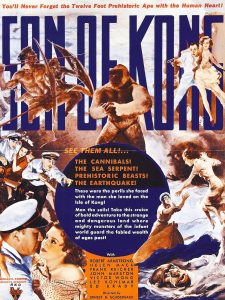
After Jimmy From NASA flies him back to Indiana to get his microphone, Timothy Deal of the Derailed Trains of Thought podcast returns to Monster Island to continue the “Kong Quest” with Son of Kong, the almost forgotten sequel to King Kong. If the 1933 masterpiece is a grand myth, the sequel is a pleasant bedtime story. Screenwriter Ruth Rose, when talking about writing this film, said, “If you can’t go bigger, go funnier,” which is an apt statement about this film and sequels in general. Nathan and Tim’s lively discussion connects Son of Kong to the Russian film Battleship Potemkin, Raiders of the Lost Ark, and Terminator 2: Judgment Day—and gives Jimmy a lot of work for “Jimmy’s Notes.” They also theorize about what happened to “Mrs. Kong”/Kiko’s mother, which actually puts this and the first film into perspective…sorta. The Toku Topic builds off of the previous one with a philosophical discussion of how 1930s filmmakers addressed the Depression in their movies, touching on themes like escapism and collective rage.

Here’s the Kaijuvision Radio episode on King Kong vs. Godzilla for you to listen to as part of MIFV’s Kong coverage: Episode 8: King Kong vs. Godzilla (1962) (The Japanese Economic Miracle (The Golden 60s))

Timestamps:
Intro: 0:00-3:49
Entertaining Info Dump: 3:49-9:43
Toku Talk: 9:43-56:24
Toku Topic: 56:24-1:19:44
Outro: 1:19:44-end

© 2019 Moonlighting Ninjas Media

Bibliography/Further Reading
“Culture and Politics in the Great Depression” by Alan Brinkley

“Escapism” (Wikipedia)

“Escapism and Leisure Time 1929-1941” (Enclopedia.com)

“How the Great Depression inspired Hollywood’s golden age” by Paul Whitington

Kaijuvision Radio, Episode 2: Godzilla Origins – King Kong (1933) and The Beast from 20,000 Fathoms (1953)

King Kong: History of a Movie Icon from Fay Wray to Peter Jackson by Ray Morton

Kong Unbound: The Cultural Impact, Pop Mythos, and Scientific Plausibility of a Cinematic Legend (edited by Karen Haber)

Kong Unmade: The Lost Films of Skull Island by John LeMay

Son of Kong Wiki Articles
Gojipedia
Wikizilla
Wikipedia

Son Of Kong (1933) Review – Kong-A-Thon Episode 2 (DMan1954)

Tracking King Kong: A Hollywood Icon in World Culture (2nd edition) by Cynthia Erb

The Uses of Enchantment: The Meaning and Importance of Fairy Tales by Bruno Bettelheim (pg. 45-60)

“Why Fantasy Matters Too Much” by Jack Zipes