Tag Archives: nathan marchand

I’d Rather be a Trendsetter (or “Do I Have a Fanbase?”)

I wish I had numbers this good.

Sometimes looking at the numbers is discouraging.

Since my last few YouTube videos have been somewhat controversial troll magnets, I decided to check their statistics. While one has close to 3,000 views (it’s since slowed down because it’s designated as “unlisted”), the average amount of time the 12-minute video was viewed was two minutes. (In fact, that was the average for almost all of my videos). In other words, it’s been viewed many times but not often finished (and yet garnered such hate—I guess that’s an accomplishment). 😛 On the other hand, most of my other videos have only a few hundred views, at best.

I could look at this two ways: 1) I’m not as good as making videos as I thought, or 2) people on YouTube have super-short attention spans and get bored more easily than most. The former puts the blame on me and the latter puts the blame on the audience. Honestly, I’m not sure which is true.

Writers aren’t much without readers. They need a fanbase in order to make a living. The problem is building one. Fans are notoriously fickle, particularly in the speculative fiction realm. Striking a balance between giving them what they think they want and what they (or the stories) need is a tightrope act that’d scare most acrobats. I’ve been told by a few publishers and agents that the stories I submitted to them were “well-written” and that I had talent, but what I wrote wasn’t “trendy.” This annoys me. I’ve rarely, if ever, been one to follow trends. I’d rather be a trendsetter. I have far more respect for authors who dream up fresh ideas as opposed to trying to become the next J.R.R. Tolkien, J.K. Rowling, or Stephanie Meyer (God help us if any writers try to become the next E.L. James…). My English professor, Dr. Dennis E. Hensley, always told his students to be themselves as writers instead of watered down versions of other writers.

People sometimes ask me how many copies of my books have sold. I honestly don’t know. I once asked my publisher a few years ago how many copies of Pandora’s Box had sold, but I was disappointed with the numbers so I haven’t asked since. I’m not expecting it to be a New York Times bestseller, but I do hope some people are buying it and enjoying it. While I know number of copies sold and video view counts aren’t necessarily indications of quality, they can be indications of how well the creator is reaching his audience.

Regardless, when I hear people describe themselves as a “fan” of me, I’m surprised. Hopefully someday that won’t be such a shock anymore.

Fellow creators, what do you do to build your fanbase?

Digression 11: My Tribute to Leonard Nimoy

I reflect on how much impact the legendary Leonard Nimoy has had on my life. He was an amazing man and will be greatly missed by the geek community.

I’ll never be able to watch Spock’s death and funeral from “Star Trek II: The Wrath of the Khan” the same way ever again.

(Featuring the music track “Amazing Grace” by James Horner).

Representation in Stories is Overrated

Marvel Comics recently announced it was launching a new title with an all-female Avengers team called A-Force. It seems like it will feature many of the House of Ideas’ most famous superheroines—like She-Hulk, Black Widow, and Phoenix—many of whom have been members of the main Avengers team.

I’m not opposed to this idea in concept. If Marvel thinks they can generate good stories with a team like this, I’m all for it. The problem, I think, is that doesn’t seem to be their motivation. This reeks of political correctness. It’s an attempt at “diversifying” their titles because they think it’ll appeal to a wider audience. (Ironic considering this team technically isn’t diverse because it has no men on it).

The comic book industry has been dominated by men since its inception. Generally speaking, male authors write male protagonists because they’re drawing upon their own experiences as a male. Now, that doesn’t mean they haven’t written any female characters well. I’d argue there are plenty out there. Unfortunately, comics have a reputation for presenting those characters as sexual objects. Some of it is deserved, but I’d say some of it isn’t. It depends on the individual creators, companies, and/or eras. Regardless, my point remains that it’s understandable that superheroines are a minority in comics because most creators are male (and that’s not a bad thing).

This comic, whether it’s good or not, seems like it’s based on the notion that particular demographics won’t enjoy a story unless the protagonists share their gender, ethnicity, religion, and/or whatnot. In this case, they could be assuming that women won’t read the regular Avengers titles because there are only a few women on the team at any given time (in the first movie, there was only one). This extends to other demographics (i.e. only black people will enjoy stories featuring black characters).

I reject this idea. I’m sure it’s true for some people, but I don’t think most audiences care. What I look for is a good story with characters I like and/or identify with. This goes way beyond skin color or reproductive organs. A truly great story is one that focuses on human experiences, which transcend those outward superficial differences. I read/watch The Hunger Games because it has a good story; the protagonist’s gender had little or no effect on my enjoyment. Everyone has dealt with stuff like trauma, pain, joy, love, and rejection. Those things aren’t a respecter of persons, whether they be fictional or real.

One of my favorite characters in the Star Trek franchise is Benjamin Sisko from Deep Space Nine. Obviously, he’s a black man. But guess what? I never notice. What do I notice? His soft-spoken demeanor, his furious temper, his love for his son, and the pain of losing his wife in battle. All universally human experiences. Read this excerpt from the show’s bible that describes the character. Nowhere does it mention his ethnicity. It was only brought up in the show when it was necessary. That’s how it should always be handled. A character’s ethnicity, gender, and/or religious beliefs can be used to create drama (or comedy), but it shouldn’t define them. It’s only a small part of who they are. Trying to base the character around those traits will, in fact, alienate audiences.

Adding arbitrary diversity also hampers stories. Case in point: Tauriel in Peter Jackson’s Hobbit films. She’s not from the book or any of J.R.R. Tolkien’s Lord of the Rings canon. She was created by Jackson and his wife, Fran, because they wanted to add a woman to the almost all-male cast in the hopes of attracting a female audience. She’s completely extraneous to the story. What little purpose she has is to serve as one point in an unnecessary love triangle between her, Kili, and Legolas (who also wasn’t in the book, but I’m willing to accept him here because it’s arguable he was one of the Elves in the story). In other words, Jackson seems to think women want to see cliché “love stories” that go nowhere. Tauriel might be an okay character in concept, but ultimately she’s just part of what amounts a big-budget fanfiction. Instead, Jackson should’ve focused on Bilbo’s growth, which anyone can identify with. Stories don’t need to have romance to be appealing to women.
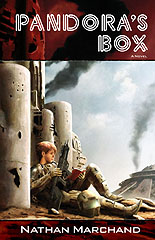
Pandora-155w-100dpi-C8In the very early stages of writing my first novel, Pandora’s Box, I thought the protagonist would be male. But as the story progressed, I realized it’d be better if the “hero” was actually a heroine. By doing that, I believe I made the story much stronger and more interesting. I didn’t do it to broaden (or narrow) it’s appeal or make some sort of statement—I did it because it was what the story needed. That’s why one of my author mantras is, “Story is king.” Whatever my tale needs, I give it. If it’s a female protagonist, then a female protagonist. If it’s a German scientist, then a German scientist. If it’s a trope-tastic ninja, then a trope-tastic ninja. 😛

So, if you’re concerned with having diversity in your story, don’t bother unless it’ll serve it well. Focus instead on telling as good of a story as you can. That will get you an audience from all races, colors, and creeds.
Digression 10: Haters Gonna Hate

After stirring up a bit of controversy in my previous video where I went on a satirical rant about why I hate Fifty Shades of Grey, I respond to some of the internet trolls in this snarky follow-up.

If this video receives any insulting comments–especially any related to autism–I will disable the comments. No trolls will have fun with this.

This is intended to humorous, but I do stand by what I say. I only criticize what was said and how the trolls behaved.

Digression 9 & 9.5: ’50 Shades of RAGE!’ and ‘V-Day Karaoke 2015’

It’s been a while since I posted a Digression–and boy, is this one a doozy! I go on an angry rant about why I hate “Fifty Shades of Grey” and I’m boycotting the film adaptation.

Agree or disagree? Leave comments below!

The annual tradition returns!

This year for your listening (dis)pleasure, I sing the classic “Don’t Stop Believin'” by Journey–and learn that I should never sing tenor ever again! I freely admit I’d be an “American Idol” reject. I hope you find it funny and sing along.

Please comment, subscribe, and share!

Proxy Characters and Wish Fulfillment

(My apologies for the risque art).
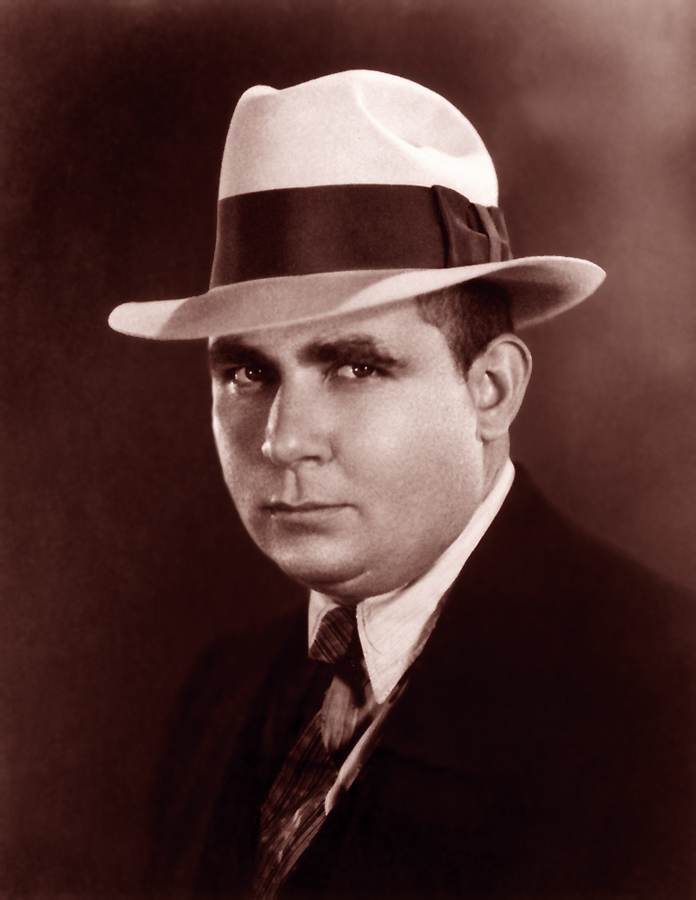
Robert E. Howard.

I once read that Robert E. Howard, creator of Conan the Barbarian, considered his most famous creation to be the idealized version of himself. In other words, Conan was who Howard wished he was, which could mean a lot of things, both good and bad. Conan is strong, determined, and powerful, but he’s also a violent, womanizing brute at times.

Regardless, Howard isn’t the first or last author to live vicariously through his stories. Whether unintentionally or not, many authors have created proxy characters for themselves or written about activities they’ve wanted to do or places they wanted to visit.

In the case of proxy characters, some are like Mr. Howard and write a character they see as the ideal they want to be or wish they were. This makes me a bit sad. There’s a tinge of hopelessness in this. Instead of realizing that dream, they settle for a fantasy. Now, it’s a fantasy that makes them money, but it’s a fantasy nonetheless. I have long said that story and art are powerful things that can teach writers and readers alike things about themselves, and while a little escapism is good for the soul, it shouldn’t become a surrogate reality. That’s why many people get addicted to television, video games, and the like. On the other hand, some authors write characters that are (often) thinly veiled copies of themselves. Now, this could be a case of unhealthy wish fulfillment, or it could be a literary device they use to make a point. As Gene Roddenberry showed with the original Star Trek, one can make controversial statements so long as it’s couched in story. I’ve seen authors—including one I know—either put their own words in their characters’ mouths or model the character after themselves. Heck, the best example I can think of is Natasha Hayden’s story in The Day After, which is pretty much her life except she’s not a spy (so far as I know).

If I’m honest with myself, I’ve done the same thing. While I wouldn’t say I modeled him after myself (at least not consciously), I must admit that sometimes I envy Jaysynn, a character I created for the Children of the Wells serial. I sometimes wish I was an athletic parkour martial artist. Well, I wish I at least matched part of that description. I’m sure with the proper effort, time, and money, I can learn martial arts. I’ve wanted to for a long time. But as for parkour…I don’t think I have enough athletic ability to do that well. I could be wrong. Perhaps with the proper training….

See what I mean by wish fulfillment? My priorities dictate that I spend more time writing than I do to be a star athlete, though I may sometimes want to be said athlete. So, as it stands, these quasi-secret aspirations are kept in the “writer’s well” in my crazy brain, from which I draw to craft my stories.

It is fun to pretend.

Speaking of Children of the Wells…time for shameless self-promotion!

Ever Feel Like You’re in a Bad Story?

02751e0b08d9923e1f820452adf9990e60b06b7bf5f1d7e68f122fdc55a0305c
(Just because cat pictures and videos are the only thing more popular than porn on the internet). 😛

A concept that’s being lost in this postmodern (or is it post-postmodern?) world is the idea of the metanarrative: the idea that meaning is conveyed through the anticipated completion of a currently unrealized master plan. This is ironic because many modern stories still make heavy use of destiny. I think that shows there’s a longing for a metanarrative.

But I digress (I like I do on my YouTube show)…

People, especially writers, use book and/or story metaphors to describe their lives. “I’m starting the next chapter of my life,” they might say. Bob Seger’s famous song “Turn the Page” arguably implies life is a book. The best stories are ones with structure and purpose, so that means our lives also have structure and purpose. If our lives are stories, there must be a storyteller. Some call him God while others call him fate or destiny, among other names. There is comfort in that, assuming you believe the storyteller is a good one.

But thanks to cynicism, many people see life as either a pointless meandering or something to which they must add their meaning (if I wasn’t a Christian, the latter would be my philosophy). In other words, proponents of the latter write their stories. They grab life by the horns and wrestle it into submission. I’d argue that even then they still believe in some sort of metanarrative; just one they’re writing one themselves, supposedly.

I sometimes wonder how my characters would react to me, the author, since I ultimately control their fates. Yes, I like to say they “talk” to me (all authors are slightly insane), but in the end, I’m the one who decides what happens to them. I made s joke on my Facebook page that I stopped writing Hope’s War once this week with the villain being held at gunpoint, so must be annoyed with me. The thing is, if he knew what my (current) plans are for him, he might murder me, assuming he was real (he isn’t, is he?) 😛

All this to ask, Do you ever feel like you’re in a bad story?

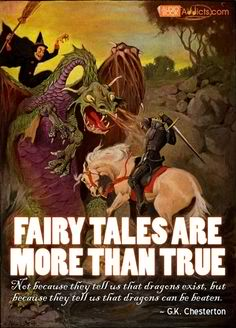
We’ve seen/read/played plenty of terrible tales, from B-movies to dime store novels. We criticize them for their atrocious plots, disappointing endings, and obnoxious characters. But often I think we feel the same about our own lives. If the last decade has shown us anything, it’s that life doesn’t always go how we planned. We work hard but aren’t rewarded for it. The hero doesn’t always get the girl. If you’re like me, you’ve either feel like you’re in a bad story, a tragedy, or you’re an unimportant bit character. You can’t expect a happy ending because life isn’t a fairy tale.

But I’m here to say have faith in the Storyteller: He’s not done writing yet.

Someone giving up on life because they hate the script they’ve been handed would be like Luke Skywalker telling Obi-Wan Kenobi, “Screw you! I’m not cut out to be a Jedi!” Or Frodo succumbing to the One-Ring (okay, I know that kinda happened, but you get my drift). Their stories weren’t over yet. Whether they knew it or not, they were being guided by a storyteller to beautiful destiny.

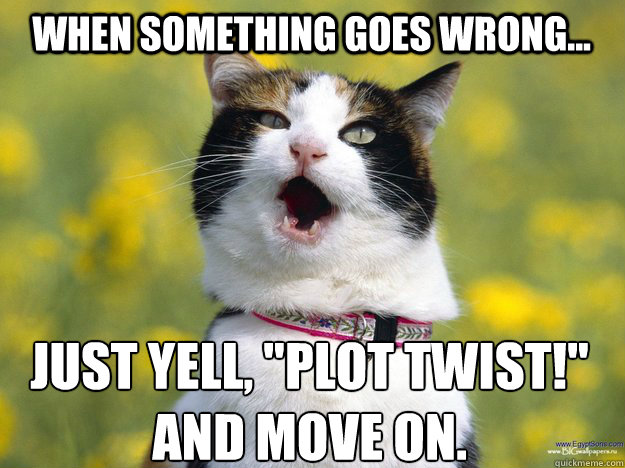
There’s a joke among writers that says…well, I posted a meme of it. It might seem trite, but there’s truth in it. Did you lose your job? See it as a challenge to overcome. You have “readers” (Hebrews 12:1) who are pulling for you. Have you ever wanted to quit reading a book or watching a movie only for it to surprise you with how good the ending was? That could be any of our lives.

Your life’s a story. Go make it a great one!

ee70c2d7f2d48c991535077d6f41e1e7

‘But I Digress…,’ Episode 28: ‘Destroyer’ Roundtable

“But I Digress…”
Hosted by Nathan Marchand

Remember that kaju novella I self-published a few years ago? I just released a brand new special edition! So, I decided to interview my collaborators on that exciting project in the first ever round table f or my show. The panel includes Nick Hayden, Natasha Hayden, and Timothy Deal. We discuss how we went about writing each of our sections of the epic giant monster thriller. Lots of laughs and insights.

The Derailed Trains of Thought YouTube channel.

Purchase “Destroyer” on Amazon.

Please comment, subscribe, and share!

What I’m Thankful For (2014)

Thanksgiving-funny

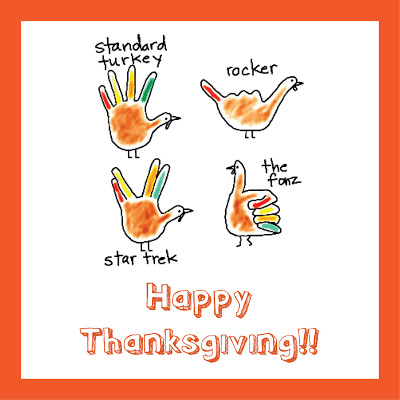
Thanksgiving is often the forgotten holiday. It’s mainly seen as a day of gluttony and football. It’s meant to be a time to reflect on what one is grateful for having (and hopefully not being a hypocrite the next day for Black Weekend, er, Friday).

So as is my tradition, here are what I’m thankful for this year.

What are you thankful for?

  1. Jesus Christ, who died for me and saved me.
  2. The Bible.
  3. My wonderful family (Mom, Dad, Josiah, Jarod, Sarah).
  4. My amazing grandmother, Ruth, who is in her 90s and still going.
  5. My fellow Children of the Wells creators (Nick, Natasha, Tim, John, Greg, etc.)
  6. My many writer friends (you know who you are).
  7. Pastor Steve, for mentoring me for three years.
  8. Silver Sable (my car).
  9. My day job.
  10. My awesome co-workers
  11. My multiple circles of friends. I love you all!
  12. My cosplays.
  13. Being 25,000 words deep into Hope’s War.
  14. Self-publishing Destroyer (Deluxe Edition).
  15. For being on three podcasts this year: “Strangers and Aliens,” “Theology Gaming University,” and “Derailed Trains of Thought.”
  16. My YouTube show, “But I Digress…”
  17. My laptop (despite its many issues).
  18. My iPhone 4S.
  19. That I can read.
  20. That I’m an American.
  21. That I’m a Hoosier.
  22. That the Megas finally released a new album.
  23. Grand Rapids Original Swing Society.
  24. Dance Tonight Fort Wayne.
  25. That I got my foot in the door to take grad school classes at IPFW.
  26. Freelance Writers’ Den.
  27. That I will soon be an uncle.
  28. Comic books
  29. Comic shops (B.E. Comics; Chimp’s Comics; Books, Comics and Things, etc.)
  30. Fans For Christ, GameChurch, and Christian Gamers Guild (among other nerd/geek outreach ministries).
  31. The amazing year of movies I’ve seen.
  32. My PS3.
  33. My movie collection.
  34. My book collection.
  35. That I’m a TUFW grad.
  36. My church.
  37. Gen-Con.
  38. That I got to meet amazing celebrities at conventions this year.
  39. That I’m creative.
  40. That I’m a nerd.
  41. Summer.
  42. Lower gas prices.
  43. That I was a groomsman in a friend’s Halloween wedding (as the Doctor). 😉
  44. My music collection.
  45. My video game collection.
  46. Volunteering with RemedyLive and afO.
  47. The Internet.
  48. Libraries.
  49. That I survived Fight Club (a church men’s group).
  50. This (so epic!):

Music and Writing

Image courtesy of www.fuelyourwriting.com.

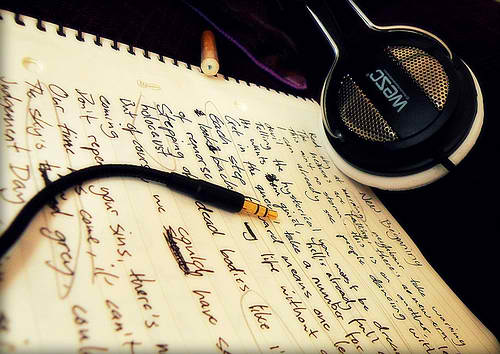
Most writers have “strange” habits when they write. One of the less strange ones is listening to music. I know many writers who do this, including myself. Some, however, find it distracting and prefer to work in silence.

For me it serves as “white noise” that helps me shut the rest of the world out and focus on crafting my story. I prefer to listen to music that has no lyrics because lyrics tend to pull me into the music and away from storytelling. Again, this isn’t true of every writer. I read in his book On Writing that Stephen King listens to ‘80s metal bands like AC/DC when he writes (which explains a lot). Regardless, that’s why I love listening to soundtracks, whether they be for films or video games. That’s music being used to supplement a story or in many cases tell a story. It helps keep my creative juices flowing. If it’s the right song, I can “hear” it playing in the background while my characters are performing their actions.

Heck, I’m listening to a few OC Remixes as I write this blog. 😛

I try to stick with soundtracks that befit the story I’m writing. My go-to albums for my writing of Hope’s War (the sequel to my first novel, Pandora’s Box) include the Tron: Legacy Soundtrack by Daft Punk, the Man of Steel Soundtrack by Hans Zimmer, and Mega Man X: Maverick Rising (a 5-disc album of Mega Man X video game remixes produced by OC Remix). All of these have strong science fiction themes and elicit emotions ranging from triumph to despair. They help get in touch with the characters so I know how to tell their stories (which makes me and other writers sound like schizophrenics, but that’s a topic for another day).

But sometimes songs have lyrics that fit beautifully with the story I’m writing. For Pandora’s Box I actually assembled an unofficial soundtrack for it (and even burned it to a CD to give to a writer friend). So far I’ve only found one song like that for Hope’s War: “Iridescent” by Linkin Park.

(Ignore the obvious Transformers tie-ins).

In fact, the first scene I ever conceived for the book—and one I’ve yet to write—came to me while I was listening to this song. Its melancholy hope inspired imagery both beautiful and terrifying. Another one of their songs, “Wretches and Kings,” inspired a chapter title in the book. Those are a few of the many reasons why “A Thousand Suns” is my favorite Linkin Park album (yes, I know that makes me weird). 😛

Do you like to listen to music while writing? If so, what genres and/or artists? Why those?