The Lost Digression: King of the Nerds Audition

Back in 2013, a friend told me that the show King of the Nerds was accepting video auditions for the second season, so he suggested I enter. I put together what I thought was a great video, but when I tried to post it, I learned I’d missed the submission deadline. So, this video has been stashed away on my hard drive since then and only recently did I remember it. I decided I’d post it just for the heck of it. Enjoy!

What’d you think? Could I have gotten on the show?

Please subscribe, comment, and share!

Well-Rounded or One-Dimensional?

As a teen and young adult, I used to regularly read Focus on the Family’s Plugged In magazine. Recently I checked out their review on the film Fury, which I’d recently seen. It can be summarized with these paragraphs:

Some will see that unflinching glimpse at perpetual bloodshed and gray-smoking destruction as something of an antiwar declaration. They’ll see a cautionary tale of men hollowed out and broken by the unspeakable horrors they’ve witnessed.

Others will see this pic as a one-dimensional splatter-fest dressed up in khaki Army fatigues, with limbs innumerable being severed by large-caliber machine gun fire and mortar rounds in a story of brutal, hard-fisted soldiers battling a Nazi evil even more wicked than themselves.

“Did you watch the same movie I did?” I asked.

In case you don’t know, Fury is a WWII film released last fall that stars Brad Pitt and Shia LeBeouf. It’s about a greenhorn Army clerk who ends up on the frontlines with a battle-hardened tank crew and sees firsthand the horrors of war, which makes him more willing to kill the enemy. I read Plugged In’s review because I wanted to see what they thought of Shia LeBeouf’s character, who is a Christian. (LeBeouf reportedly became a Christian during filming). Unsurprisingly, they complained about him, saying, “We see him praying over a wounded soldier and quoting Scripture several times before battle. That said, his faith doesn’t keep Bible from being every bit as foulmouthed, boozy and death-dealing as the rest of his crew.”

“What would you have preferred?” I asked. “That he fit the equally one-dimensional perfect or nigh-perfect stereotypes that populate ‘Christian’ films?” Besides, he swears much less than his compatriots and I only saw him drink alcohol once (and he didn’t get drunk, which is what the Bible condemns, not the consumption of alcohol). When his buddies make crude comments about German women, he rebuffs them. When they harass a German woman, he doesn’t participate. He’s not perfect. No Christian is. But he’s also not the typical religious loon usually seen in Hollywood films.

They also presented Pitt’s character “Wardaddy” as a one-dimensional, jingoistic jarhead you typically see in bad action movies. That more than anything baffled me. I saw a character who in many writers’ hand would’ve been exactly that, but both the script and Pitt’s performance add layers of nuance to him. He’s a man who will shoot an unarmed POW in the back and a few scenes later protect two young German women from his horny subordinates. When he walked into the women’s apartment, I fully expected him to do something terrible to them. But he didn’t. He does encourage the new recruit to sleep with the younger woman (which isn’t shown, so it’s debatable if they did anything). When they walk out he tells the young guy “nothing needs to be said.” But his defining characteristic is his desire to keep his men alive. Yes, he’s a borderline psychopath and possibly mad, but he’ll do whatever it takes to save his men. They respect him for that. He’s a complicated character. I was enthralled by this.

Not only was I bothered by this magazine’s overly biased review, it reminded me of the challenge writers have creating characters. What’s the difference between a well-rounded character and an inconsistent character? The line between them seems fuzzy. A common trait of bad writing is having a character act, well, out of character. For example, it’d be out of character for a patriotic superhero like Captain America to suddenly become a communist. On the other hand, people are full of contradictions. Hardened criminals in prison will abuse child rapists because despite their depravity, they have enough moral fiber to know not to do unspeakable things to children.

Dinobot from Beast Wars.

This is why my favorite character from Beast Wars (a childhood favorite cartoon) is Dinobot. He’s easily the best-written character in the show because of how complicated he is. He’s too honorable to be a bad guy but too rough to be a good guy. He’ll pull an opponent from cliff edge if said opponent slipped, but he has no qualms with throwing him off the cliff during combat. He defected from the bad guys but considered betraying the good guys later. Yet all of this fit his character.

Kenneth Branagh as Hamlet.

A more literary (and nebulous) example is Hamlet. Talk about complicated! I haven’t the time or space to adequately examine him. All I will say is he is a man who has a strong sense of justice and strong moral convictions. He believes his uncle is a murderer who should die, but he hesitates to kill him because of that same moral compunction against murder. (I don’t subscribe to the theory that Hamlet was insane). That’s one of many reasons why Shakespeare’s Hamlet is considered to be one of the greatest pieces of literature in the history of the world: the titular character is nuanced, complex, and seemingly contradictory.

Writing characters like this is hard. This is why many writers prefer static, two-dimensional characters. That isn’t to say such characters are inherently bad. There are plenty of great examples out there. But even they must act in ways consistent with their character.

What do you think is/are the difference(s) between well-rounded and inconsistent characters?

Intro Video/Trailer for my YouTube Channel

I just thought I’d share this. Enjoy!

Hello! I’m Nathan Marchand, author and YouTube host. Here’s a little video introducing my show and channel.

Looking for a little entertainment and/or instruction? Curious to hear my opinion on the newest books and movies? Then check out “But I Digress…,” my vlog (or video podcast or whatever people call it these days). Leave comments and join the discussion. Have ideas for future episodes? Send them my way. Want to catch the video ASAP? Subscribe to my YouTube Channel!

Featuring the music “Mega Man 2 Medley” from the new Super Smash Bros.

I’d Rather be a Trendsetter (or “Do I Have a Fanbase?”)

I wish I had numbers this good.

Sometimes looking at the numbers is discouraging.

Since my last few YouTube videos have been somewhat controversial troll magnets, I decided to check their statistics. While one has close to 3,000 views (it’s since slowed down because it’s designated as “unlisted”), the average amount of time the 12-minute video was viewed was two minutes. (In fact, that was the average for almost all of my videos). In other words, it’s been viewed many times but not often finished (and yet garnered such hate—I guess that’s an accomplishment). 😛 On the other hand, most of my other videos have only a few hundred views, at best.

I could look at this two ways: 1) I’m not as good as making videos as I thought, or 2) people on YouTube have super-short attention spans and get bored more easily than most. The former puts the blame on me and the latter puts the blame on the audience. Honestly, I’m not sure which is true.

Writers aren’t much without readers. They need a fanbase in order to make a living. The problem is building one. Fans are notoriously fickle, particularly in the speculative fiction realm. Striking a balance between giving them what they think they want and what they (or the stories) need is a tightrope act that’d scare most acrobats. I’ve been told by a few publishers and agents that the stories I submitted to them were “well-written” and that I had talent, but what I wrote wasn’t “trendy.” This annoys me. I’ve rarely, if ever, been one to follow trends. I’d rather be a trendsetter. I have far more respect for authors who dream up fresh ideas as opposed to trying to become the next J.R.R. Tolkien, J.K. Rowling, or Stephanie Meyer (God help us if any writers try to become the next E.L. James…). My English professor, Dr. Dennis E. Hensley, always told his students to be themselves as writers instead of watered down versions of other writers.

People sometimes ask me how many copies of my books have sold. I honestly don’t know. I once asked my publisher a few years ago how many copies of Pandora’s Box had sold, but I was disappointed with the numbers so I haven’t asked since. I’m not expecting it to be a New York Times bestseller, but I do hope some people are buying it and enjoying it. While I know number of copies sold and video view counts aren’t necessarily indications of quality, they can be indications of how well the creator is reaching his audience.

Regardless, when I hear people describe themselves as a “fan” of me, I’m surprised. Hopefully someday that won’t be such a shock anymore.

Fellow creators, what do you do to build your fanbase?

Digression 11: My Tribute to Leonard Nimoy

I reflect on how much impact the legendary Leonard Nimoy has had on my life. He was an amazing man and will be greatly missed by the geek community.

I’ll never be able to watch Spock’s death and funeral from “Star Trek II: The Wrath of the Khan” the same way ever again.

(Featuring the music track “Amazing Grace” by James Horner).

Representation in Stories is Overrated

Marvel Comics recently announced it was launching a new title with an all-female Avengers team called A-Force. It seems like it will feature many of the House of Ideas’ most famous superheroines—like She-Hulk, Black Widow, and Phoenix—many of whom have been members of the main Avengers team.

I’m not opposed to this idea in concept. If Marvel thinks they can generate good stories with a team like this, I’m all for it. The problem, I think, is that doesn’t seem to be their motivation. This reeks of political correctness. It’s an attempt at “diversifying” their titles because they think it’ll appeal to a wider audience. (Ironic considering this team technically isn’t diverse because it has no men on it).

The comic book industry has been dominated by men since its inception. Generally speaking, male authors write male protagonists because they’re drawing upon their own experiences as a male. Now, that doesn’t mean they haven’t written any female characters well. I’d argue there are plenty out there. Unfortunately, comics have a reputation for presenting those characters as sexual objects. Some of it is deserved, but I’d say some of it isn’t. It depends on the individual creators, companies, and/or eras. Regardless, my point remains that it’s understandable that superheroines are a minority in comics because most creators are male (and that’s not a bad thing).

This comic, whether it’s good or not, seems like it’s based on the notion that particular demographics won’t enjoy a story unless the protagonists share their gender, ethnicity, religion, and/or whatnot. In this case, they could be assuming that women won’t read the regular Avengers titles because there are only a few women on the team at any given time (in the first movie, there was only one). This extends to other demographics (i.e. only black people will enjoy stories featuring black characters).

I reject this idea. I’m sure it’s true for some people, but I don’t think most audiences care. What I look for is a good story with characters I like and/or identify with. This goes way beyond skin color or reproductive organs. A truly great story is one that focuses on human experiences, which transcend those outward superficial differences. I read/watch The Hunger Games because it has a good story; the protagonist’s gender had little or no effect on my enjoyment. Everyone has dealt with stuff like trauma, pain, joy, love, and rejection. Those things aren’t a respecter of persons, whether they be fictional or real.

One of my favorite characters in the Star Trek franchise is Benjamin Sisko from Deep Space Nine. Obviously, he’s a black man. But guess what? I never notice. What do I notice? His soft-spoken demeanor, his furious temper, his love for his son, and the pain of losing his wife in battle. All universally human experiences. Read this excerpt from the show’s bible that describes the character. Nowhere does it mention his ethnicity. It was only brought up in the show when it was necessary. That’s how it should always be handled. A character’s ethnicity, gender, and/or religious beliefs can be used to create drama (or comedy), but it shouldn’t define them. It’s only a small part of who they are. Trying to base the character around those traits will, in fact, alienate audiences.

Adding arbitrary diversity also hampers stories. Case in point: Tauriel in Peter Jackson’s Hobbit films. She’s not from the book or any of J.R.R. Tolkien’s Lord of the Rings canon. She was created by Jackson and his wife, Fran, because they wanted to add a woman to the almost all-male cast in the hopes of attracting a female audience. She’s completely extraneous to the story. What little purpose she has is to serve as one point in an unnecessary love triangle between her, Kili, and Legolas (who also wasn’t in the book, but I’m willing to accept him here because it’s arguable he was one of the Elves in the story). In other words, Jackson seems to think women want to see cliché “love stories” that go nowhere. Tauriel might be an okay character in concept, but ultimately she’s just part of what amounts a big-budget fanfiction. Instead, Jackson should’ve focused on Bilbo’s growth, which anyone can identify with. Stories don’t need to have romance to be appealing to women.
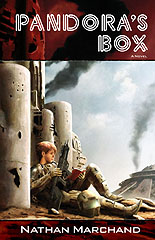
Pandora-155w-100dpi-C8In the very early stages of writing my first novel, Pandora’s Box, I thought the protagonist would be male. But as the story progressed, I realized it’d be better if the “hero” was actually a heroine. By doing that, I believe I made the story much stronger and more interesting. I didn’t do it to broaden (or narrow) it’s appeal or make some sort of statement—I did it because it was what the story needed. That’s why one of my author mantras is, “Story is king.” Whatever my tale needs, I give it. If it’s a female protagonist, then a female protagonist. If it’s a German scientist, then a German scientist. If it’s a trope-tastic ninja, then a trope-tastic ninja. 😛

So, if you’re concerned with having diversity in your story, don’t bother unless it’ll serve it well. Focus instead on telling as good of a story as you can. That will get you an audience from all races, colors, and creeds.
Attacking the Idol

I’ve seen many internet trolls in my time. Often I’ve defended someone from internet trolls. Admittedly on rare occasions I’ve been a troll. However, this week I’ve become a troll magnet, especially on YouTube.
Since my YouTube show is titled, “But I Digress…,” any video I post that is either unrelated or only tangentially-related to the usual things I cover on the show (writing, creativity, reviews), I call them “Digressions” (admittedly, the titles were inspired by the podcast “Derailed Trains of Thought” hosted by my friends Nick Hayden and Timothy Deal who have tangential episodes called “Side Tracks.”) Since it was Valentine’s Day, I decided to post two videos: one where I go on an exaggerated angry rant about why I hate Fifty Shades of Grey and the other my annual (bad) karaoke of a love song.

The former was intended to be satirical. I meant everything I said in the video—that I objected to Fifty Shades as a writer and (Christian) moralist—but the rage was exaggerated; it was acting. I was channeling internet personalities like Angry Joe and the Angry Video Game Nerd. Or perhaps it might be more accurate to say I was trying to be Mark Levin. Now, I’m willing to admit that I may have not executed the video well and/or that the joke was lost on people. It was the first time I’ve tried something like this. Most people on YouTube don’t know who I am, so as far as they might know I’m always crazy like that. But the majority of the comments I got were from trolls. If I had to summarize everything they said, it’d be thus (except with lots of spelling errors and some profanity): “You’re an angry Aspie faggot virgin idiot with an imaginary girlfriend who won’t put out.” I’ve rarely run into such a potent concentration of human cruelty. As of the date of this blog, I’ve de-listed the video. I may re-list it later, but even then the comments will be disabled so the trolls can’t have any more “fun.”

I made a response video, and while I thought it was clever, most articles I’ve since read on dealing with trolls have said doing such things is usually a bad idea. It will be the one and only time I “feed” trolls.

“Don’t feed the trolls,” however, isn’t the biggest lesson I learned this past week.

First, satire, like sarcasm, has difficulty surviving on the internet. It’s not the most ideal environment for it since much of the nuance and context that make it work is lost. Although, satire by definition is “a genre in…which vices, follies, abuses, and shortcomings are held up to ridicule, ideally with the intent of shaming individuals, corporations, government or society itself, into improvement” (Wikipedia). It’s the one form of humor that simultaneously dulls its barbs and sharpens them. It both entertains and holds a mirror up to the audience so they can examine their ideas and perceptions. Some will get the joke; some won’t. Some will get it and lash out (as happened in the tragic Charlie Hebdo shooting last month).

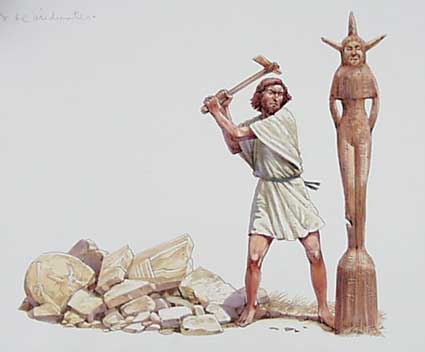
Which brings me to the second, more important lesson: when one takes an unpopular moral stand, backlash should be expected. To paraphrase my pastor when I talked with him about this, “You attacked their idol, and they will defend it at all costs.” Fifty Shades of Grey has sold over 100 million copies (typing that almost makes me want to vomit), and the movie grossed a record-breaking $85 million domestically (though it has since plummeted). 😉 This means I’m challenging a huge fanbase who, for whatever reason, love this crap. I find most erotica like this to be literary pornography, which is addictive. Criticizing it is like taking cocaine from a junkie: expect a fight. I’m sure many of the trolls were fans of this trash (or simply porn addicts). Like religious zealots, they attack anyone who seeks to destroy their idols—in this case pornography—with an incredible fervor. They had to strike back because I said something that was threatening to them. But many of them cared nothing for E.L. James’ books. These trolls simply smelled blood in the water and swarmed me in a feeding frenzy. They’re opportunists who scour the internet looking for someone to take pot shots at because they find sadistic enjoyment in it. They’re the most dangerous kind of trolls. There’s no defeating them.

But I’d argue that these consequences are worth it. As a Christian, I expect persecution (heck, sometimes it comes from fellow Christians). It stems from being different and/or having a dissenting opinion. I would rather be the target of trolls because I took a moral stand than because I—gasp!—enjoy Michael Bay’s Transformers movies (though I do have my issues with them). That, I think, is key. While bullying is wrong regardless of its motivation, there is honor in suffering for a good reason.

Digression 10: Haters Gonna Hate

After stirring up a bit of controversy in my previous video where I went on a satirical rant about why I hate Fifty Shades of Grey, I respond to some of the internet trolls in this snarky follow-up.

If this video receives any insulting comments–especially any related to autism–I will disable the comments. No trolls will have fun with this.

This is intended to humorous, but I do stand by what I say. I only criticize what was said and how the trolls behaved.

Digression 9 & 9.5: ’50 Shades of RAGE!’ and ‘V-Day Karaoke 2015’

It’s been a while since I posted a Digression–and boy, is this one a doozy! I go on an angry rant about why I hate “Fifty Shades of Grey” and I’m boycotting the film adaptation.

Agree or disagree? Leave comments below!

The annual tradition returns!

This year for your listening (dis)pleasure, I sing the classic “Don’t Stop Believin'” by Journey–and learn that I should never sing tenor ever again! I freely admit I’d be an “American Idol” reject. I hope you find it funny and sing along.

Please comment, subscribe, and share!

Proxy Characters and Wish Fulfillment

(My apologies for the risque art).
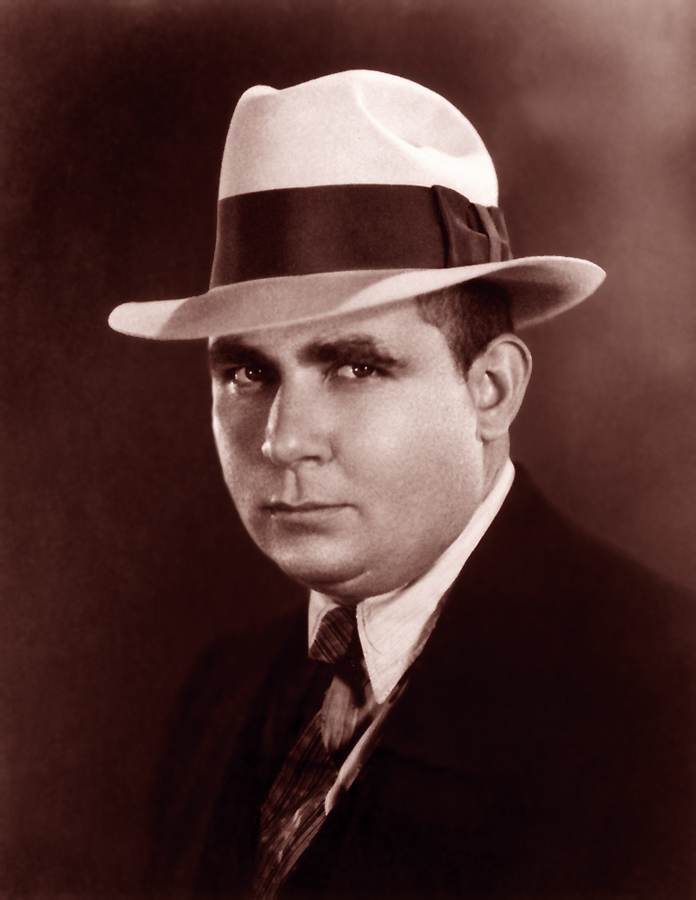
Robert E. Howard.

I once read that Robert E. Howard, creator of Conan the Barbarian, considered his most famous creation to be the idealized version of himself. In other words, Conan was who Howard wished he was, which could mean a lot of things, both good and bad. Conan is strong, determined, and powerful, but he’s also a violent, womanizing brute at times.

Regardless, Howard isn’t the first or last author to live vicariously through his stories. Whether unintentionally or not, many authors have created proxy characters for themselves or written about activities they’ve wanted to do or places they wanted to visit.

In the case of proxy characters, some are like Mr. Howard and write a character they see as the ideal they want to be or wish they were. This makes me a bit sad. There’s a tinge of hopelessness in this. Instead of realizing that dream, they settle for a fantasy. Now, it’s a fantasy that makes them money, but it’s a fantasy nonetheless. I have long said that story and art are powerful things that can teach writers and readers alike things about themselves, and while a little escapism is good for the soul, it shouldn’t become a surrogate reality. That’s why many people get addicted to television, video games, and the like. On the other hand, some authors write characters that are (often) thinly veiled copies of themselves. Now, this could be a case of unhealthy wish fulfillment, or it could be a literary device they use to make a point. As Gene Roddenberry showed with the original Star Trek, one can make controversial statements so long as it’s couched in story. I’ve seen authors—including one I know—either put their own words in their characters’ mouths or model the character after themselves. Heck, the best example I can think of is Natasha Hayden’s story in The Day After, which is pretty much her life except she’s not a spy (so far as I know).

If I’m honest with myself, I’ve done the same thing. While I wouldn’t say I modeled him after myself (at least not consciously), I must admit that sometimes I envy Jaysynn, a character I created for the Children of the Wells serial. I sometimes wish I was an athletic parkour martial artist. Well, I wish I at least matched part of that description. I’m sure with the proper effort, time, and money, I can learn martial arts. I’ve wanted to for a long time. But as for parkour…I don’t think I have enough athletic ability to do that well. I could be wrong. Perhaps with the proper training….

See what I mean by wish fulfillment? My priorities dictate that I spend more time writing than I do to be a star athlete, though I may sometimes want to be said athlete. So, as it stands, these quasi-secret aspirations are kept in the “writer’s well” in my crazy brain, from which I draw to craft my stories.

It is fun to pretend.

Speaking of Children of the Wells…time for shameless self-promotion!

A Man from Another Time Exploring Another Universe