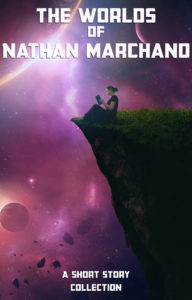
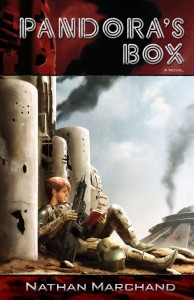
The cover that CreateSpace kept refusing to approve.
You read that right—the title of my new book is the same as my website. (I guess I’m just that pretentious. :P)
The familiarity doesn’t end there, though. This book is a collection of “unpublished” short stories spanning my entire career. I put quotation marks on “unpublished” (I did it again!) because many of these stories have already been posted here on my website. I learned at a Gen-Con writing seminar that stories posted on an author’s website are considered published. I may have tom rethink how often I post stories on here, then.
Regardless, I wanted to have this book finished in time for Gen-Con last week, but CreateSpace, the website I use for my self-published stuff, kept being nitpicky about the cover. It took me too long to make it happy. (I still had great sales at Gen-Con, though).
What’s the theme of this collection? I’ll let the back cover copy explain:
From the mind that brought you
Pandora’s Box & Ninjas and Talking Trees
comes…a little bit of everything.
An amnesiac cybernetic vigilante confronting the man he once called “comrade”—after he was murdered by him.
A pro-wrestler accosted in the ring by a mysterious hooded figure the night before his brother takes him to court.
A living gargoyle who protects a young wayward woman from her persecutors—and a demon.
Santa Claus’ race with a flying saucer on Christmas Eve.
A young man flying a hang glider through a ruined city to save his stranded twin siblings from a giant monster believed to be an angry god.
You’ll find these and other fantastical things in this, the first short story collection from Nathan Marchand. This anthology spans the vast breadth of the universe and genre. You’ll laugh, you’ll cry, and then you’ll do both again. Herein you’ll find adventure, drama, tragedy, and…ninjas (because they make everything better).
Prepare to enter…
The Worlds of Nathan Marchand
That pretty much says it all.
Barring any more unforeseen hiccups, the book will be available on Amazon within the next few days. The eBook should follow soon afterward.
Here’s my first proper blog in two weeks. If you’ve been following my Facebook page, I said that my website was shut down by my host because it was hacked. It affected not only me, but Nick Hayden’s website, the Derailed Trains of Thought podcast website, and the Children of the Wells website. To make matters worse, this happened when Nick went on vacation and when he went to a youth conference with his church and when all of our domain names came up for renewal! In other words, I was out a lot of money getting all this crap sorted out—and right before Gen-Con to boot. (Speaking of which, I’m writing this blog from the Hyatt Regency, where I’m staying for Gen-Con).
Thankfully, as you can see, my website is up and running again. We’re all still working out some bugs, but everything seems to be fine. We’re considering moving to a new website host, but no decision has been made yet.
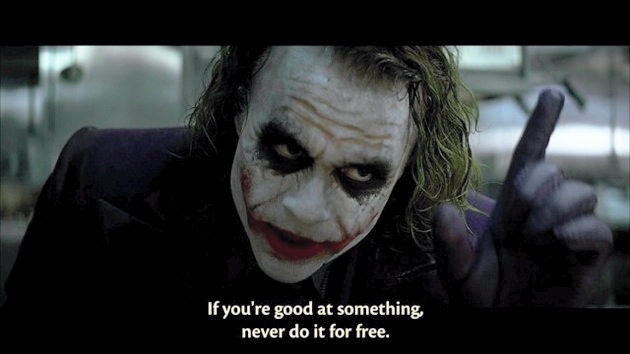
This is the latest in a series of setbacks I’ve been having with my writing career of late. GigaGeek Magazinedoesn’t update much anymore, Exaimer.com shut down (all of my content there is gone), and I’ve been inactive so long at IPFW (where I want to get a teaching assistanceship to pay for M.A. in English) that I have to re-apply. Even then, there’s no guarantee I’ll get a T.A. position, and I refuse to take out more student loans. The former will require me to find more clients to freelance for. Honestly, I worked with Giga as a means of building my resume and creating something from the ground up; I wasn’t paid for my content. From now on, I’m not doing that. As a wise (and mad) man once said,
These sorts of things are depressing. I knew the writer’s life would be hard—I was warned of that in college—but I still expected I’d be doing better than this. This will require that I reassess what I’m doing and how I do it. I started the year feeling like God was giving me a positive vision for 2016. Stuff like this has made me question that. But the year is not over. While last year’s Gen-Con was so good, I’m unsure this year’s show will live up to it, I’ve still had decent sales today (the first day). Once I recover from this harrowing but exuberating weekend, I’m going to make new strategies for how to go about my writing. Don’t worry: I’ll still keep publishing books (I have a few forthcoming). However, if there’s one thing I can say for sure will happen before 2017, it’ll be change. That’s been the common theme I’ve gotten from most of my friends when I talk to them about this stuff. I think God is trying to tell me something. Perhaps He ripping the “training wheels” off, so to speak, so I can progress to a new level in my life and career.
I’m confident I can get more work as a writer. After all…
I’ve written often on time management for writers and my own struggles with making time for writing. I certainly have the desire to tell my stories, but oftentimes life simply gets in the way. It sucks, but it’s true.
Except when it isn’t.
I should clarify: sometimes I don’t make time to write not because of circumstances beyond my control, but because I choose not to write. How’s that?
Besides being a seemingly rare extroverted writer, I’m a self-described “story junkie.” As in I go out of my way to enjoy as many stories as I can. Most of my hobbies—reading, gaming, movie watching, photography, among others—revolve around storytelling (or at least creativity). I eat that stuff up. You might even say I’m a borderline addict. I tend to go through phases. Right now I’m trying to read the pile of comic books next to my bed. Other times I’ll play story-driven video games or read a lot of books. Whatever phase I’m in, I usually inject something else amidst all that (like a trip to the movies to see the latest blockbuster).
The trouble is I get so caught up with other stories that I neglect my own. Consumption is easier than creation. An old adage (erroneously attributed to Dorothy Parker, apparently) says, “Writers don’t like writing—they like having written.” In other words, writing is hard work. Authors may enjoy it, but they much prefer finishing a project than being in the middle of one. Sometimes it’s a chore to grind out 1,000 words or figure out what your heroine will/should say next. I say all that to say that it’s a common trap for writers to procrastinate because they would rather go enjoy someone else’s completed story (or at least an analysis of a story) than work on their own. “Write another scene for my Great American Novel? Maybe after I binge watch a few episodes of Clone Warson Netflix.”
This is a trap I often fall into. I’m so desperate to get my fix of story, I procrastinate on whatever project I’m working on. Sometimes I even the excuse that whatever story I’m consuming will somehow help with whatever project I’m writing (how a Godzilla movie relates to Children of the Wells, I don’t know. 😛 ). In reality, though, it’s just me making an excuse to not to the hard work of writing. This is why I’ve had to train myself to use my “story fixes” as rewards for accomplishing writing goals. Then I can use those stories as inspiration.
It’s not always easy, trust me. After a long day at my day job (a part-time job that’s been giving me full-time hours lately, making time management even harder), I don’t always want to write. I’ll just want to relax with a good book or a new video game. But as Jack London famously said,
“You can’t wait for inspiration. You have to go after it with a club.”
Are you a “story junkie”? Does it distract you from your work? How do you deal with it?
You may recall when I appeared on the 50th episode of Derailed Trains of Thought, the podcast hosted by my friends Nick Hayden and Timothy Deal, that I was featured in several segments. One of those was “Cinema Selections,” a segment that normally featured amateur film historian/critic Brian Scherschel. Since he discussed a Godzilla movie, however, I was invited to join in. While I mostly deferred to Brian since it was his part of the show, we did have a lively talk about the film in question (this one). Tim suggested as he closed the segment that Brian and I should start our own podcast on Godzilla, which I joked would be called “PodZilla.”
That was November 2014. I didn’t think much more about that podcast after that. That is until a few months ago when Brian contacted me and wanted to know if I was still interested in making that a reality. He’d just finished a couple of other projects and was looking to do something new. I told him I was in.
We’ve been meeting almost every week planning things out. I didn’t realize how much work was required to make a good podcast. It’s also because Brian very much wants to make this a high-quality product that people will be interested in listening to. We haven’t had any arguments (yet), but we have had to settle some differences in opinions on how to go about this project. We’ve also been investigating potential copyright/lawsuit issues since Toho, the Japanese studio that produces the Godzilla films, is hypersensitive about protecting its intellectual properties. So far everything looks like it’ll be fine.
PodZillaCast (the name had to change since our first name choices, surprisingly, were already taken) will be a limited series that analyzes and critiques the Godzilla film franchise. It’ll discuss the merits of each film while also putting them into their cultural and historical contexts. Brian and I believe these films are massively underappreciated and underrated by most westerners, and we hope to shed some light on the films that will get more people interested in watching them.
Will we stop after getting through all 30+ Godzilla films? Maybe. I’ve said that if people enjoyed what we’re doing, we’ll turn our attentions to other kaiju (giant monster) films like King Kong or Pacific Rim, but that’ll depend on how our initial project does.
When will the show launch? I’ve no idea. We’re still hammering out some details. I think it should be up and running by the end of the year, I think. So, keep an eye out for us on your podcatcher of choice!
How will this affect my videos? I don’t know that, either. As it is, I’ve been scaling back on how many videos I make, usually limiting myself to one (or two) a month. I simply don’t have the time to make as many. I keep very busy, obviously. “But I Digress…” may go on hiatus. But only maybe.
I’m once again touching on the subject of time management, but not exactly like I’ve done before. I’ve been reminded in the last few weeks of an important writer’s mantra:
Protect your writing time at all costs.
As writers, our time is valuable. We don’t have more than other people, so we must block out sections of the day (or week or month) to sit at our desk with a keyboard (or typewriter or paper) to do what we love. But, if you’re like me, you have a lot of other things vying for your time. There are chores that need done. Day jobs that must be worked (ugh!). Friends and family who want to spend time with you. It can be overwhelming. It can also be easy to let those other things steal your time, whittling it down until you get to the end of the day and realize you didn’t write any of the 1,000 words you wanted to have completed in your new novel.
Those things, however, are the “good” ones. Writers need to be around people (writers are human, after all), and until they become more successful, they need other jobs to sustain themselves. But trouble comes when other things like social media get in the way. I’m not saying Facebook and Twitter are terrible things that should be avoided, but there comes a point where they become huge time-sucks. You may feel obligated to rummage through 50 notifications and leave 1,000 words-worth of comments on Facebook instead of focusing that energy and time into penning 1,000 words for your current writing project. Trust me, I know.
As Sean Connery said in Finding Forrester, “Writers write.” That requires time. In this (over)busy society we live in, time is even more precious. Writers can’t afford to let it be stolen unnecessarily. It is a treasure hidden in a castle and there are barbarians at the gate seeking to steal it. We writers must stand our ground. We have to set boundaries and, if needed, quote Captain Picard, who said, “This far! No farther!” when something infringes on our writing time. Otherwise, we will miss a deadline and/or regret that we didn’t get anything done.
How can you go about this? I think it depends on your particular personality and situation. If social media is an issue, consider doing a “detox,” i.e. fast from it for a time. If your hobbies are taking you away, discipline yourself to use them as a reward for completing your writing goal. For example, I try not to play video games until I’ve finished working or completed a task. Heck, a friend told me about a couple of apps one can get on a smartphone that turn goal setting into an RPG. I believe they’re called LifeRPG and EpicWin. Those might be great tools for you.
I started this blog by saying writers have to defend their writing time. I ended with talk of role-playing games. Perhaps it’s time for you to “level up” and protect that treasure!
A few weeks ago, I attended Indiana Comic-Con in Indianapolis. It was nice to go to a convention as an attendee and not as a vendor (though I’d love to be a vendor there—I just need to produce my own comic book first). I had the privilege of meeting comic book writers Marv Wolfman and Chris Claremont, as well as the actors Ian McDiarmid, Ray Park, John Rhys Davies, and Brent Spiner.
But by far the most impressive celebrity I met at that con was comic book artist/writer George Perez. Ironically, trying to meet him was also the most frustrating part of my trip.
See, there was so much I wanted to do at this convention this year that I opted to attend for two days. My friends and I stayed in a nearby hotel. I’d met Mr. Perez before several years ago the first time I went to this convention. I had him autograph several graphic novels and paid him to make a sketch of Captain America for me. This year I was excited to meet him because I had Break-Thru #1, an obscure comic he drew in the ‘90s, for him to sign, and I planned to play “Stump Perez” by asking him to draw NightMan, one of the characters from that book.
The problem was the convention decided to sell tickets first thing in the morning each day of the convention to fans who wanted to meet him. These “golden ticket” holders would get first priority, even if they left and came back. Since most of them brought whole longboxes of comics for Mr. Perez to sign and asked for a sketch (which took 10-15 minutes to draw), the line moved slower than a snail. Myself, my friend Sergio, and many other fans stood in line for hours on end for two days waiting to see him. On one hand, we were frustrated as heck. On the other hand, we formed a strange bond. I called them “my line brothers.” We all became friends through this strange sort of adversity. Heck, we even came up with this meme as an expression of our frustration. 😛
I’m confident none of this stuff was Mr. Perez’s idea, though, because he came to our line twice on the last day of the con and apologized for what happened. Not only that, he took control of the situation and although he couldn’t make us sketches, he promised that he would get us all autographs on up to five items. I was quick to say, “I think I speak for all of us, George, when I say we all still love you!” Indeed, Mr. Perez’s only sin that convention was that he was too nice.
Closing time came, and after wrapping up a few things, Mr. Perez came to our line—which was at least 25-30 people long—and led us through the vendor hall full of people deconstructing booths. Someone joked that he was the Pied Piper, but I said that he was Moses leading us through the wilderness. “Part the Red Sea for us, George!” I called.
Me (right) meeting George Perez (left). (Yes, that’s my 10th Doctor cosplay).
Finally, he led us to the hallway, where we re-formed our line. I was the third or fourth person down. One of Mr. Perez’s assistants came over carrying a chair and asked him if he wanted to sit. Then Mr. Perez said something that solidified my already growing respect for him: “They did not sit, so I will not sit!” Wow!
This is a man who knows how to treat his fans. He knows he wouldn’t be where he is without them. To know that they suffered and waited patiently when they could’ve done other things (and some did give up, by the way), he made sure to do right by them. I’m not sure how many other celebrities would’ve done that.
I hope someday, if I get that popular, to remember what I saw him do that day and emulate it.
This may or not not be an artist’s depiction of one of my book signings. 😛
I’ve made it no secret no secret that I’m a shameless self-promoter. In fact, it could be argued that I sometimes flaunt it. However, this week I had two interesting thoughts related to that this week. Well, more like one thought and one realization.
First, my self-promotion got me in a bit of trouble. I shared my latest blog in a Facebook group I’m in, and not one but two admins messaged me after deleting my post telling me not to do that since the group had a rule against self-promotion posts (because otherwise the members would be bombarding the group with them). It wasn’t the first time this had happened. Admittedly, it was kinda my fault since I’d forgotten about that rule.
One admin asked me why I promoted myself. “I’m a writer,” I replied. “It’s what I do.” She said she wrote haikus but didn’t go around saying, “Look at me! Look at me!” I had to fight the urge to start an argument.
“Why?” you ask. Because the difference between me and this admin is—at the risk of sounding rude—I’m a professional and she’s a hobbyist (as far as I know). I don’t know if she has a blog where she posts her haikus, but if she’s okay with only a few people reading her stuff, that’s fine. I, on the other hand, want to grow an audience because writing is my trade and vocation. If I am to be (more) successful, I must get people to read my stuff. I figured that since I’d built a community in this Facebook group, that’d be a great place to generate interest. Apparently not. I understand why they have the rule, but I didn’t like the attitude I was getting from the admin. However, I can forgive it because she may not understand where I’m coming from. I know promotion can come across as arrogant—just look at Donald Trump (yes, I went there)—but it’s necessary in my line of work. If you have the right attitude, though, it can work. It may seem paradoxical that self-promotion and humility can go together, but I do believe it’s possible.
Ironically, I learned that even I have limits on my self-promotion, which brings me to my second thought. I realized that when I’m trying to get people interested in books (or anything I make/do), I’m filled with passionate adamancy. I’m a one-man hype machine. But when people come back to me and say they loved my stuff, I almost want to refuse their praise. But…I have friends who are more talented and/or successful than me! I think.
Yeah, I’m weird.
I’m not 100-percent sure why I think like this. It might be because I feel like I’m the lesser of my peers. I’m in awe of their talent and think they’re more deserving of people’s attention and adoration. Or I think that if I was as talented and/or savvy as my more successful peers, then I’d deserve the praise. In other words, I see a disconnection. Does that make sense?
What do you think, True Believers? Do you have similar struggles? How do you deal with these thoughts?
Hi. My name is Nathan Marchand, and I’m a freelance writer/author. You don’t know me, but I shared your recent blog post “An Open Letter to Rey from Star Wars” on my professional Facebook page, and it’s become one of the most shared things I’ve ever posted. Sadly, neither it nor you were getting much love. Heck, one or two people erroneously thought I had written it because we share the same first name. (Guilty by name association. Gah!)
When I first read your article, it did make me stop and think. I, too, am not fond of militant neo-feminism (let’s call it “misandry”) and its effects on modern culture. But after seeing the reactions to your article and discussing it with people, I’ve concluded that, honestly, you’re full of crap.
Your post is full of so much misinformation and misunderstanding, I’m not sure where to start. Perhaps I’ll start with your so-called “biblical evidence” since I’m also a Christian.
You cite three verses—Isaiah 19:16, Jeremiah 51:30, and Nahum 3:13—that describe the armies of nations being judged by God as “becoming like women” when facing His wrath. You cite these and 1 Peter 3:7 as evidence of how God designed women as vulnerable creatures. (Ironically, the now more politically correct rendition of the New International Version [NIV] uses the word “weaklings.”)
First, these passages aren’t meant to denote gender roles. In the ancient world, women usually didn’t fight in the army. They weren’t allowed. Culturally speaking, that was a role for men. In such an environment, they didn’t receive training and/or upbringing that made them into fighters. So, if they were to be accosted by enemy warriors, they should shrink back in fear. But that would be true of men who didn’t receive the same training. You’ve missed the point of these passages. 1 Peter 3:7 describes women as “the weaker partner,” which is talking about physical strength. Yes, generally speaking, men are physically larger and stronger than women. In the ancient world, this was why men did the fighting.But at the same time, it doesn’t mean women are helpless.
An artist’s rendering of Deborah from Judges 4-5.
Case in point: you neglect whole Bible stories that feature women being directed by God to take on traditionally masculine roles. Remember Deborah from Judges 4-5? She became the Judge (i.e. leader) of Israel. She liberated her people from King Jabin.
Jael killing Sisera in Judges 4. Art by Felice Ficherelli, 17th century.
Yes, she had Barak as her military commander, but he still deferred to her. It was her who spurred him on to victory. Despite his prowess, he was hesitant to fight. In other words, he was the one acting “like women,” as the verses you cited would say. But Judges 4 features another heroic woman: Jael. Deborah prophesied that Sisera, the enemy commander, would be delivered into the hands of a woman, but it wasn’t her. Jael brought final victory to Israel by driving a tent peg into Sisera’s skull.
You might argue they’re the exceptions to the rule, but the fact remains that these women showed that God is more than willing to use women is traditionally masculine roles if no men will step up to the plate. To paraphrase the Other from Marvel’s The Avengers, “They are not the cowering wretches” you seem to think they are. “I could quote more scriptures about women being vulnerable in ways that men aren’t,” you condescendingly wrote. “I’m not going to bother doing that because you ladies are all capable of reading your Bibles.” Well, I could say the same when it comes to biblical examples of strong women doing exactly what Deborah and Jael did, too. But I know you’re capable of reading your Bible, right?
Which brings me to this point: women, especially in the modern world, have had to learn to take care of themselves. Not because they’re raging feminists who think they don’t need men, but because they have to. They’re single and don’t have a man to protect them. They might live in a dangerous neighborhood. So, they go learn martial arts and/or self-defense. Most hope this is a temporary situation, but even if they do get married, their husbands can’t be with them 24/7 to make sure they’re safe. A married woman could be mugged while walking home from work. What should she do then? Nothing because it means she’s violated her so-called “biblical gender role”? Absolutely not!
Speaking of martial arts, you seem to think that fighting is all about strength. It isn’t. As this video shows, it’s also about speed and technique. Martial arts like judo and jujitsu teach practitioners to use the power of their opponents against them. This is why women learn this and similar martial arts to defend themselves (read this article for more). They don’t require practitioners to be stronger than their opponents. These could be used by small men, too, by the way.
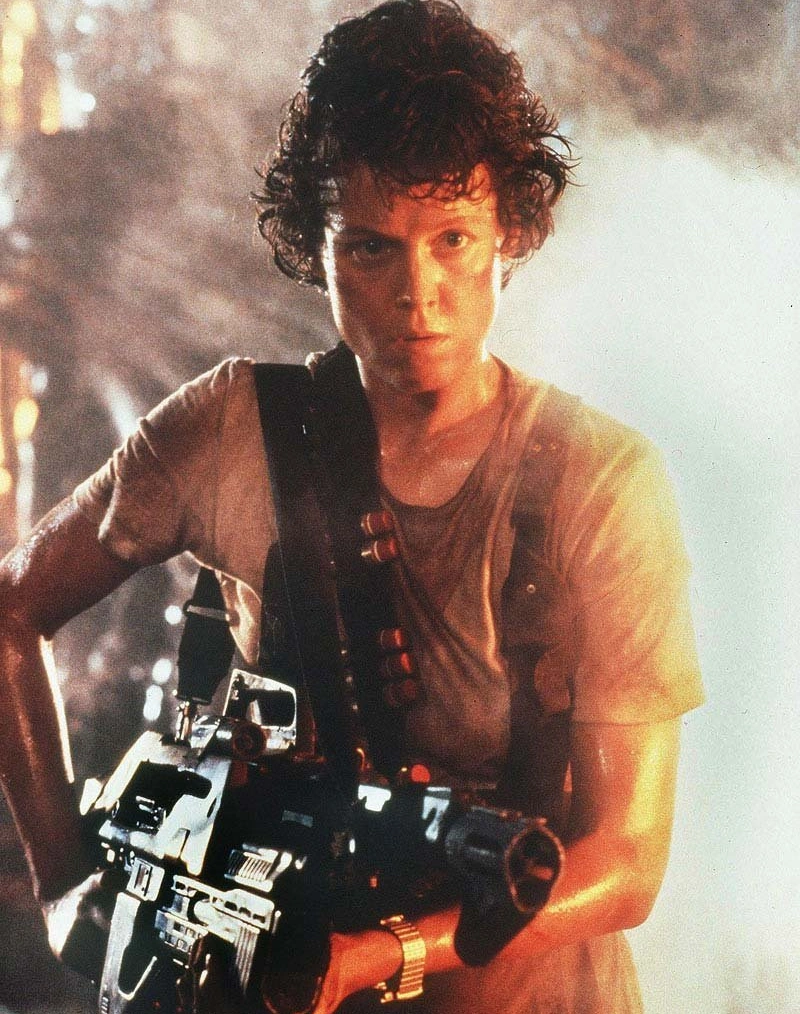
You seem to think that “action heroines” started with Ellen Ripley in the original Alien. This shows a gross ignorance of literature. Perhaps it started in pop culture with her, but female warriors date all the way back to ancient mythology. Ever heard of the Amazons? They’re just one of many examples dating back millennia. Need I also bring up Susan from The Chronicles of Narnia and Eowyn from The Lord of the Rings, both of which were written by devout Christians (C.S. Lewis and J.R.R. Tolkien, respectively)? If I had daughters, I’d want them to look up to fictional heroines like that. (Heck, I’ve considered naming a daughter Eowyn for that reason!)
You note that many of these action heroines fall back into their “traditional”/”biblical” roles as mothers because it’s their God-given nature. You cite Ripley defending Newt like a mother in Aliens and Black Widow in Avengers: Age of Ultron regretting that she was forcibly sterilized as examples. You bring them up like they’re proof that something was violated. I don’t think so. There are countless examples in nature of mothers violently defending their young (ever try to anger a mother bear? You’ll regret it). Human females will also fight to defend their children. The fact that childbearing is biologically wired into them is an undeniable part of their identity, but it isn’t their entire identity.
But this happens with male characters, too. Aragorn in The Lord of the Rings isn’t just a rugged warrior—he’s also a tender lover. That seems to go counter to hyper-masculine heroes like Rambo. Some might even call it feminine.
You want to argue with the great C.S. Lewis about creating an action heroine?Witch King: “No man can slay me!” Eowyn: “I am no man! You look upon a woman!” ::stab::
You wrote, “[Men] certainly don’t feel very inspired to fight for a woman trying her best to be just like us. She’s worth dying for used to mean something. If there’s nothing precious or exalted about women, why should men bother?” This is difficult for me to address because I have known women who fit this description. I even went on a date with one. I don’t think I’d have described that girl as “trying to be just like a man,” but she was a lady pastor who knew martial arts. Her position, biblical knowledge, and self-defense skills were intimidating because she seemed so self-sufficient, I didn’t know what I could offer her. She seemed to have all the major bases covered. I’m not saying I have to be smarter, stronger, and/or more capable at everything than a wife, but I do want to feel like what we offer each other is equal. So, in other words, I can see where you’re coming from, but I think you take it too far. If anything, it seems like an expression of self-deprecation and self-loathing, which is sad and kind of pathetic, to be honest. I don’t know if you’re married, but if you aren’t, I think I know why. (I hate to make personal comments like that because I despise ad hominems).
Are the heroines you speak of influenced by misandry (or militant feminism)? Possibly. Some have certainly been claimed by neo-feminism. However, all good stories are written in such a way that individual readers/viewers can interpret the characters through their own lenses. I don’t see Rey or Ripley or Black Widow as feminist icons that declare, “I am woman! Hear me roar for I hate men and don’t need them!” Rey is young girl trying to survive alone on a harsh desert planet. Ripley is a space trucker who’s forced to defend herself against a hideous monster. Black Widow is a secret agent trying to recover her humanity after it was stripped away from her. Those are universal human struggles. The fact that they’re women is immaterial. There are many, many examples of the same sorts of stories featuring male characters.
I could probably say more, but this blog has already gone long, and I’ve spent way more time writing it when I should writing my next short story or novel.
I bet you’d *love* my first novel!
(Speaking of which, Mr. Alberson, I should send you my first book, Pandora’s Box. It’d make your head explode because it features a tomboyish, redheaded, butt-kicking but still feminine heroine).
If you read this, thanks. I hope it gives you some things to think about.
I’ve written many times before about time management and how I tend to take on more projects than I possibly could. Well, this week, that bit me in the butt—hard. Remember how I was supposed to have a book signing at the North Webster Public Library Monday?
I completely forgot about it.
You read that right. I didn’t even show up at my own book signing. That’s never happened before. I’m the kind of person who keeps his commitments. I feel terrible if I don’t. I don’t like letting people down. Yet despite seeing promotions for my signing and even blogging about it, it completely slipped my mind. Since I was scheduled to work at my day job, I couldn’t even show up late. I spent the next 24 hours beating myself up over it until I talked with the librarians this afternoon and found out all is well. I’ve been rescheduled for June 6 from 3:30pm-6:30pm.
Me yesterday when I got the call from the library.
I had no excuse or justification for forgetting it. The problem is I’ve had a hundred other things on my mind, from writing/creative projects to family concerns to a ballroom dance showcase this weekend, and everything in between. Something was bound to get lost in the shuffle, to fall through the cracks. It’s not the first time it’s happened, but it was never something this major. It was usually just something like forgetting to blog (I’ve apologized many a time for that) or neglecting my writing time (a greater crime for writers). Never have I neglected an entire event centered on me that was promoted for several weeks, if not longer, beforehand. My only solace is the library is too nice to make me wear the proverbial bag of shame over my head whenever I’m there.
At the height of my metaphorical self-flagellation over this, I told myself I should just cut out everything that isn’t work or writing from my life to avoid more gaffs like this. Now that I’m in my right mind, I don’t think I’ll go that far. I’ll certainly put some thought into cutting back on some things, though. More importantly, I’m going to be smarter about remembering my own schedule. Put it on my calendar or in my iPhone as a reminder.
Or marry a secretary. 😛
The point is I can’t afford to make a mistake like this again. It was unprofessional and irresponsible. At least it only happened for relatively small event. If I forget Gen-Con….
So, be it known that future events will not sneak up on me like one of Master Heeyah’s ninjas. 😛
That guy wrote “2001: A Space Odyssey,” so he should know! 😛
This is a subject that I’ve been pondering for a while, but it was brought to a head for me this week when I, once again, heard a new host on a podcast I listen to make the typical “magic is always bad/evil in fiction” comment that all-too-many Christians have made for years. I’m shocked there are still people adhering to this anti-Dungeons & Dragons propaganda that was prevalent during the ‘80s (the ‘80s, people! Thirty years ago!) What made this even more ironic was this particular host was my age or a little younger.
This host (who shall remain nameless) has made it clear on several occasions that he thinks magic, particularly when presented in a dark fashion, should never be presented in fiction. He even said when he guest-starred on podcast run by one of his co-hosts while discussing Wonder Woman’s origin in the animated film Justice League: Gods and Monsters, that he liked her “more science-based” origin. The more I hear him, the more I realize that it isn’t just “dark” magic he opposed, but all magic. It makes me wonder if he hates Chronicles of Narnia or The Lord of the Rings just because they include magic, despite them being written by Christians.
Admittedly, I once held to similar views, so I can’t fault him too much. But with age (and education) came new ideas. I’ve now concluded that magic is no different than science in speculative fiction. In other words, they aren’t evil in and of themselves.
First—and I owe my college chum Aaron Brosman for pointing me toward this—while magic is regarded by many Christians as evil, they forget that evil is incapable of creating. This idea comes from J.R.R. Tolkien, author of The Lord of the Rings (I wish I could remember where he said it). Here’s the logic behind it: 1) God is wholly good. 2) Everything was created by God. 3) Everything God created was good (Gen. 1:31). 4) Everything that is now “evil” was once good. 5) Ergo, evil can only corrupt what was once good.
By extension, this means that God, not Satan, created magic. One only has to look at the miracles performed by prophets like Elijah, the Apostles, and, yes, Jesus Himself to see “magic” at work. They call fire from the sky (2 Kings 1:10), healed the sick (Acts 3), and even raised the dead (Elijah – 1 Kings 17:17-22; Jesus – John 11:1-44). In other words, fire magic, healing magic, and necromancy (sorta). And these were God-fearing men and the Savior Himself, not people like the Witch of Endor (no, she didn’t hang out with Ewoks).
The difference here is twofold: 1) the source of the “magical” power, and 2) the motivations for using it. The purpose of magic, whether in real life or in fiction, is ultimately to acquire power. This manifests as command over the elements, animals, spirits, and/or people (curses, love spells, etc.). This grants the user certain abilities and/or privileges. So, the reason God forbade the practice of magic in passages like Deuteronomy 18:9-12 isn’t because the practices themselves but because mankind would use it to seek power separate from Him. This has been humanity’s tendency since Adam and Eve sinned. God knows this and doesn’t want anything to come between Him and His creation. Along with that, the source of much of those magical powers was demonic, so it’s also a form of protection. The Devil and his angels may promise power to those willing to ally with them, but in the end they will only exploit and torment those who fall into their clutches.
Now, that isn’t to say that all depictions of magic in fiction should be forbidden. The sources of the magic aren’t always demonic. Even when they are, they’re presented as evil, or at the very least in a negative light. For Christians to shy away from the realities of evil is arguably naïve.
So, I have a question for you: If magic is about the acquisition of power, how is it “holier” than magic?
Stop and think about it. In both real life and fiction, sinful people use science to acquire power apart from God. Some perhaps think that by using science they can become gods themselves, in some way. Stories like Frankenstein by Mary Shelly touch on this theme. Dr. Frankenstein seeks to overcome death itself by conducting experiments to reanimate dead bodies. He uses science to violate the natural laws put in place by God Himself (mind you, death didn’t exist before the Fall, but I digress). In real life, humanity used science to create the nuclear bomb, a weapon whose power rivals that of mythical gods, if not God Himself. Speculative fiction is replete with mad scientists who seek power through the use of science. Are they any different from the sorcerers in fairy tales? But just like magic, God created science, so science isn’t inherently evil.
This is why Jesus said in the Sermon on the Mount that it wasn’t enough to simply not murder or commit adultery. No, it someone was angry at his fellow man or lusted after someone, he was already guilty because he sinned in his heart. It’s relatively easy to keep rules. Even the Pharisees did that. But Jesus cut through that and went straight to the, well, heart of the issue. It wasn’t enough to keep rules: what truly mattered was one’s motivations and thought life. He later said, “But the things that come out of a person’s mouth come from the heart, and these defile them. For out of the heart come evil thoughts—murder, adultery, sexual immorality, theft, false testimony, slander” (Matthew 15:18-19).
So, no, magic isn’t the Devil’s creation. Writing characters who utilize supernatural power that isn’t demonic and for the right reasons isn’t immoral. Writing characters who do use demonic magic for acquiring power for evil purposes is true to life.
I would encourage you to take a closer look at what the Bible says about magic. It’s not as simple as you think.
P.S. I understand there are people who may choose not to read/watch/play such stories because they were once involved in the occult, and I can respect that. That’s like an alcoholic avoiding beer.
What are your thoughts on this subject? Are magic and science no different?
A Man from Another Time Exploring Another Universe