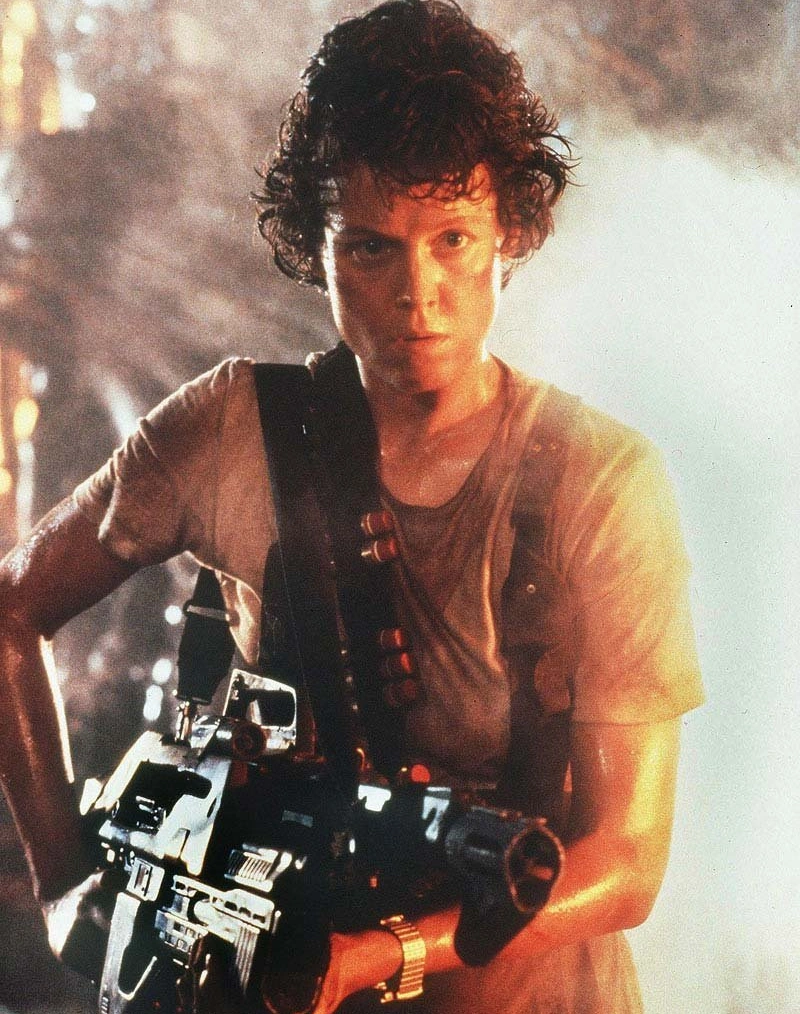
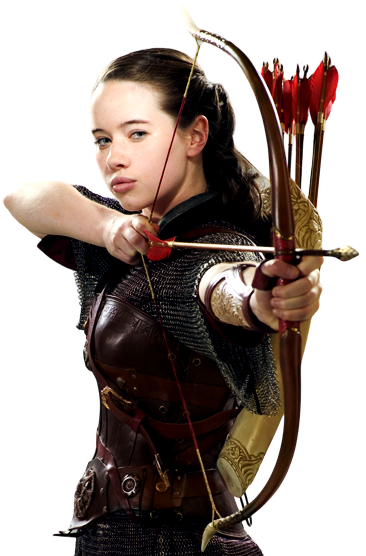
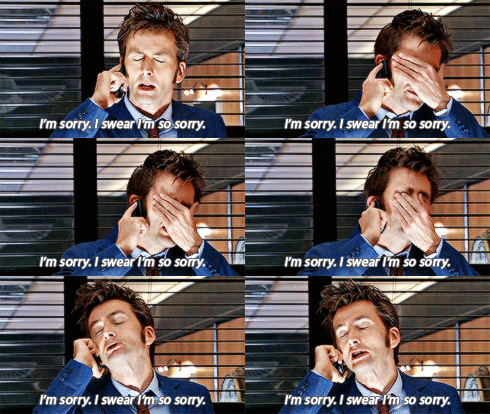
This may or not not be an artist’s depiction of one of my book signings. 😛
I’ve made it no secret no secret that I’m a shameless self-promoter. In fact, it could be argued that I sometimes flaunt it. However, this week I had two interesting thoughts related to that this week. Well, more like one thought and one realization.
First, my self-promotion got me in a bit of trouble. I shared my latest blog in a Facebook group I’m in, and not one but two admins messaged me after deleting my post telling me not to do that since the group had a rule against self-promotion posts (because otherwise the members would be bombarding the group with them). It wasn’t the first time this had happened. Admittedly, it was kinda my fault since I’d forgotten about that rule.
One admin asked me why I promoted myself. “I’m a writer,” I replied. “It’s what I do.” She said she wrote haikus but didn’t go around saying, “Look at me! Look at me!” I had to fight the urge to start an argument.
“Why?” you ask. Because the difference between me and this admin is—at the risk of sounding rude—I’m a professional and she’s a hobbyist (as far as I know). I don’t know if she has a blog where she posts her haikus, but if she’s okay with only a few people reading her stuff, that’s fine. I, on the other hand, want to grow an audience because writing is my trade and vocation. If I am to be (more) successful, I must get people to read my stuff. I figured that since I’d built a community in this Facebook group, that’d be a great place to generate interest. Apparently not. I understand why they have the rule, but I didn’t like the attitude I was getting from the admin. However, I can forgive it because she may not understand where I’m coming from. I know promotion can come across as arrogant—just look at Donald Trump (yes, I went there)—but it’s necessary in my line of work. If you have the right attitude, though, it can work. It may seem paradoxical that self-promotion and humility can go together, but I do believe it’s possible.
Ironically, I learned that even I have limits on my self-promotion, which brings me to my second thought. I realized that when I’m trying to get people interested in books (or anything I make/do), I’m filled with passionate adamancy. I’m a one-man hype machine. But when people come back to me and say they loved my stuff, I almost want to refuse their praise. But…I have friends who are more talented and/or successful than me! I think.
Yeah, I’m weird.
I’m not 100-percent sure why I think like this. It might be because I feel like I’m the lesser of my peers. I’m in awe of their talent and think they’re more deserving of people’s attention and adoration. Or I think that if I was as talented and/or savvy as my more successful peers, then I’d deserve the praise. In other words, I see a disconnection. Does that make sense?
What do you think, True Believers? Do you have similar struggles? How do you deal with these thoughts?
Hi. My name is Nathan Marchand, and I’m a freelance writer/author. You don’t know me, but I shared your recent blog post “An Open Letter to Rey from Star Wars” on my professional Facebook page, and it’s become one of the most shared things I’ve ever posted. Sadly, neither it nor you were getting much love. Heck, one or two people erroneously thought I had written it because we share the same first name. (Guilty by name association. Gah!)
When I first read your article, it did make me stop and think. I, too, am not fond of militant neo-feminism (let’s call it “misandry”) and its effects on modern culture. But after seeing the reactions to your article and discussing it with people, I’ve concluded that, honestly, you’re full of crap.
Your post is full of so much misinformation and misunderstanding, I’m not sure where to start. Perhaps I’ll start with your so-called “biblical evidence” since I’m also a Christian.
You cite three verses—Isaiah 19:16, Jeremiah 51:30, and Nahum 3:13—that describe the armies of nations being judged by God as “becoming like women” when facing His wrath. You cite these and 1 Peter 3:7 as evidence of how God designed women as vulnerable creatures. (Ironically, the now more politically correct rendition of the New International Version [NIV] uses the word “weaklings.”)
First, these passages aren’t meant to denote gender roles. In the ancient world, women usually didn’t fight in the army. They weren’t allowed. Culturally speaking, that was a role for men. In such an environment, they didn’t receive training and/or upbringing that made them into fighters. So, if they were to be accosted by enemy warriors, they should shrink back in fear. But that would be true of men who didn’t receive the same training. You’ve missed the point of these passages. 1 Peter 3:7 describes women as “the weaker partner,” which is talking about physical strength. Yes, generally speaking, men are physically larger and stronger than women. In the ancient world, this was why men did the fighting.But at the same time, it doesn’t mean women are helpless.
An artist’s rendering of Deborah from Judges 4-5.
Case in point: you neglect whole Bible stories that feature women being directed by God to take on traditionally masculine roles. Remember Deborah from Judges 4-5? She became the Judge (i.e. leader) of Israel. She liberated her people from King Jabin.
Jael killing Sisera in Judges 4. Art by Felice Ficherelli, 17th century.
Yes, she had Barak as her military commander, but he still deferred to her. It was her who spurred him on to victory. Despite his prowess, he was hesitant to fight. In other words, he was the one acting “like women,” as the verses you cited would say. But Judges 4 features another heroic woman: Jael. Deborah prophesied that Sisera, the enemy commander, would be delivered into the hands of a woman, but it wasn’t her. Jael brought final victory to Israel by driving a tent peg into Sisera’s skull.
You might argue they’re the exceptions to the rule, but the fact remains that these women showed that God is more than willing to use women is traditionally masculine roles if no men will step up to the plate. To paraphrase the Other from Marvel’s The Avengers, “They are not the cowering wretches” you seem to think they are. “I could quote more scriptures about women being vulnerable in ways that men aren’t,” you condescendingly wrote. “I’m not going to bother doing that because you ladies are all capable of reading your Bibles.” Well, I could say the same when it comes to biblical examples of strong women doing exactly what Deborah and Jael did, too. But I know you’re capable of reading your Bible, right?
Which brings me to this point: women, especially in the modern world, have had to learn to take care of themselves. Not because they’re raging feminists who think they don’t need men, but because they have to. They’re single and don’t have a man to protect them. They might live in a dangerous neighborhood. So, they go learn martial arts and/or self-defense. Most hope this is a temporary situation, but even if they do get married, their husbands can’t be with them 24/7 to make sure they’re safe. A married woman could be mugged while walking home from work. What should she do then? Nothing because it means she’s violated her so-called “biblical gender role”? Absolutely not!
Speaking of martial arts, you seem to think that fighting is all about strength. It isn’t. As this video shows, it’s also about speed and technique. Martial arts like judo and jujitsu teach practitioners to use the power of their opponents against them. This is why women learn this and similar martial arts to defend themselves (read this article for more). They don’t require practitioners to be stronger than their opponents. These could be used by small men, too, by the way.
You seem to think that “action heroines” started with Ellen Ripley in the original Alien. This shows a gross ignorance of literature. Perhaps it started in pop culture with her, but female warriors date all the way back to ancient mythology. Ever heard of the Amazons? They’re just one of many examples dating back millennia. Need I also bring up Susan from The Chronicles of Narnia and Eowyn from The Lord of the Rings, both of which were written by devout Christians (C.S. Lewis and J.R.R. Tolkien, respectively)? If I had daughters, I’d want them to look up to fictional heroines like that. (Heck, I’ve considered naming a daughter Eowyn for that reason!)
You note that many of these action heroines fall back into their “traditional”/”biblical” roles as mothers because it’s their God-given nature. You cite Ripley defending Newt like a mother in Aliens and Black Widow in Avengers: Age of Ultron regretting that she was forcibly sterilized as examples. You bring them up like they’re proof that something was violated. I don’t think so. There are countless examples in nature of mothers violently defending their young (ever try to anger a mother bear? You’ll regret it). Human females will also fight to defend their children. The fact that childbearing is biologically wired into them is an undeniable part of their identity, but it isn’t their entire identity.
But this happens with male characters, too. Aragorn in The Lord of the Rings isn’t just a rugged warrior—he’s also a tender lover. That seems to go counter to hyper-masculine heroes like Rambo. Some might even call it feminine.
You want to argue with the great C.S. Lewis about creating an action heroine?Witch King: “No man can slay me!” Eowyn: “I am no man! You look upon a woman!” ::stab::
You wrote, “[Men] certainly don’t feel very inspired to fight for a woman trying her best to be just like us. She’s worth dying for used to mean something. If there’s nothing precious or exalted about women, why should men bother?” This is difficult for me to address because I have known women who fit this description. I even went on a date with one. I don’t think I’d have described that girl as “trying to be just like a man,” but she was a lady pastor who knew martial arts. Her position, biblical knowledge, and self-defense skills were intimidating because she seemed so self-sufficient, I didn’t know what I could offer her. She seemed to have all the major bases covered. I’m not saying I have to be smarter, stronger, and/or more capable at everything than a wife, but I do want to feel like what we offer each other is equal. So, in other words, I can see where you’re coming from, but I think you take it too far. If anything, it seems like an expression of self-deprecation and self-loathing, which is sad and kind of pathetic, to be honest. I don’t know if you’re married, but if you aren’t, I think I know why. (I hate to make personal comments like that because I despise ad hominems).
Are the heroines you speak of influenced by misandry (or militant feminism)? Possibly. Some have certainly been claimed by neo-feminism. However, all good stories are written in such a way that individual readers/viewers can interpret the characters through their own lenses. I don’t see Rey or Ripley or Black Widow as feminist icons that declare, “I am woman! Hear me roar for I hate men and don’t need them!” Rey is young girl trying to survive alone on a harsh desert planet. Ripley is a space trucker who’s forced to defend herself against a hideous monster. Black Widow is a secret agent trying to recover her humanity after it was stripped away from her. Those are universal human struggles. The fact that they’re women is immaterial. There are many, many examples of the same sorts of stories featuring male characters.
I could probably say more, but this blog has already gone long, and I’ve spent way more time writing it when I should writing my next short story or novel.
I bet you’d *love* my first novel!
(Speaking of which, Mr. Alberson, I should send you my first book, Pandora’s Box. It’d make your head explode because it features a tomboyish, redheaded, butt-kicking but still feminine heroine).
If you read this, thanks. I hope it gives you some things to think about.
I’ve written many times before about time management and how I tend to take on more projects than I possibly could. Well, this week, that bit me in the butt—hard. Remember how I was supposed to have a book signing at the North Webster Public Library Monday?
I completely forgot about it.
You read that right. I didn’t even show up at my own book signing. That’s never happened before. I’m the kind of person who keeps his commitments. I feel terrible if I don’t. I don’t like letting people down. Yet despite seeing promotions for my signing and even blogging about it, it completely slipped my mind. Since I was scheduled to work at my day job, I couldn’t even show up late. I spent the next 24 hours beating myself up over it until I talked with the librarians this afternoon and found out all is well. I’ve been rescheduled for June 6 from 3:30pm-6:30pm.
Me yesterday when I got the call from the library.
I had no excuse or justification for forgetting it. The problem is I’ve had a hundred other things on my mind, from writing/creative projects to family concerns to a ballroom dance showcase this weekend, and everything in between. Something was bound to get lost in the shuffle, to fall through the cracks. It’s not the first time it’s happened, but it was never something this major. It was usually just something like forgetting to blog (I’ve apologized many a time for that) or neglecting my writing time (a greater crime for writers). Never have I neglected an entire event centered on me that was promoted for several weeks, if not longer, beforehand. My only solace is the library is too nice to make me wear the proverbial bag of shame over my head whenever I’m there.
At the height of my metaphorical self-flagellation over this, I told myself I should just cut out everything that isn’t work or writing from my life to avoid more gaffs like this. Now that I’m in my right mind, I don’t think I’ll go that far. I’ll certainly put some thought into cutting back on some things, though. More importantly, I’m going to be smarter about remembering my own schedule. Put it on my calendar or in my iPhone as a reminder.
Or marry a secretary. 😛
The point is I can’t afford to make a mistake like this again. It was unprofessional and irresponsible. At least it only happened for relatively small event. If I forget Gen-Con….
So, be it known that future events will not sneak up on me like one of Master Heeyah’s ninjas. 😛
A Man from Another Time Exploring Another Universe